
Importing Indian spices into Canada takes more than finding a supplier and arranging freight. Buyers also need to make sure the product meets Canadian requirements, the packaging and paperwork are in order, and the supplier can deliver the same quality and specifications consistently from one order to the next.
If you plan to import Indian spices from India to Canada, handling these steps before the shipment leaves India can help avoid unnecessary delays and unexpected costs.
Choose the Spices and Product Format
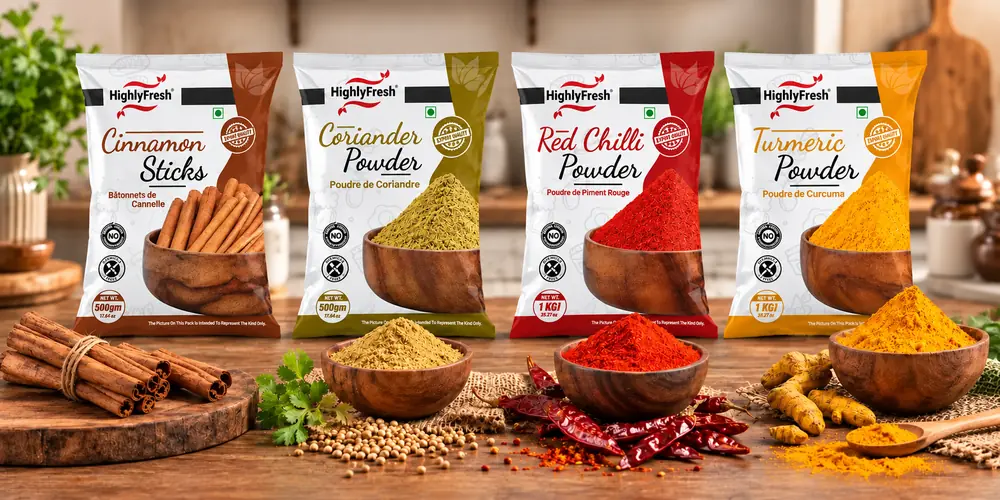
Start with the products your Canadian customers actually need. Common Indian spices include turmeric, cumin, coriander, red chilli, black pepper, cinnamon, fenugreek, cardamom, nutmeg, star anise, and blended masalas. You also need to decide the format:
- Whole spices
- Ground or powdered spices
- Spice blends
- Bulk commercial packs
- Retail-ready packs
- Private-label products
A restaurant distributor may need large food-service packs, while a grocery retailer may require consumer-ready packaging. Private-label buyers also need to plan pack sizes, artwork, and branding before production. Fortune Exicom supplies a range of Indian spices for international B2B buyers, including whole and powdered products. View the Indian spice range When requesting prices, provide the spice, form, quantity, pack size, destination, and packaging requirements.
Set Up Your Canadian Import Business
Before placing a commercial order, make sure the Canadian importing business has the required customs setup.
Commercial importers need a Business Number and an import-export program account, known as an RM account. CBSA states that CARM is the official system of record for commercial importers and other trade-chain partners. New importers with a BN9 can register an RM account through the CARM Client Portal.
Set this up before the shipment is booked. A customs broker can assist with clearance, but the importer remains responsible for providing accurate information and having the appropriate account.
Check Canadian Spice Import Requirements
SFC Licence and SFCR
Most businesses importing food into Canada need an appropriate Safe Food for Canadians (SFC) licence for the importing activity and food category. CFIA checks the licence as part of the import process, so it’s important to have the right licence in place before the shipment arrives.
Importers may also have responsibilities relating to preventive controls, supplier verification, and traceability. For businesses researching CFIA regulations for spices, the important point is that the Canadian importer must check its own obligations rather than relying only on documents supplied by the Indian exporter.
Check AIRS Before Shipping
Do not assume that every spice has the same import conditions. The CFIA Automated Import Reference System (AIRS) should be checked for the exact commodity, origin, processing and intended use. AIRS can also help determine the applicable HS code and OGD extension for the food. This product-specific check is important when reviewing spice import requirements in Canada.
Find and Verify an Indian Spice Exporter
Price should not be the only factor when sourcing spices from India. Before placing a bulk order, ask the exporter for:
- Product specifications and grade
- Samples
- Packaging options
- Batch information
- Available certifications
- Testing or Certificate of Analysis where relevant
- MOQ
- Production lead time
- Export experience
Approve a representative sample before committing to a large order. You should be able to compare the delivered product with the agreed specification on repeat shipments. Canadian businesses looking for an Indian spice exporter to Canada can review Fortune Exicom’s B2B spice supply page and discuss their requirements directly. in Canada — Fortune Exicom
Check Canadian Packaging and Labelling
The packaging needs to keep the spices safe during transport, but if you’re selling them at retail, the label also has to meet Canadian requirements. For most consumer prepackaged foods, required information must be shown in both English and French, with some exceptions. Depending on the product, this can include the product name, net quantity, ingredients, allergen information, nutrition facts, and the name and address of the responsible business.
Do not simply reuse packaging prepared for another market. For private-label products, have the Canadian label reviewed before printing. Correcting thousands of printed pouches or labels after production can create an unnecessary expense.
Prepare the Import Documents
The shipment documents should match the actual goods, quantities, values, and packaging. Depending on the product and transaction, documents may include:
- Commercial invoice
- Packing list
- Bill of lading or airway bill
- Product specification
- Certificate of Analysis where relevant
- Certificate of origin where applicable
- Commodity-specific certificates or permits where required
A phytosanitary certificate should not be assumed to be mandatory for every spice. Check the requirement for the exact commodity through the applicable Canadian import requirements. The importer or customs broker should also confirm the HS classification and required CFIA information before dispatch.
Choose Freight and Clear Customs
Sea Freight
For larger bulk Indian spices Canada orders, sea freight is generally the practical choice. LCL can suit smaller commercial shipments that do not require a full container. FCL may be more suitable for larger or regular volumes.
Air Freight
Air freight is a good option for samples, smaller orders, or urgent shipments when getting the spices to Canada quickly matters more than keeping freight costs low.
Customs
For a smooth customs clearance, the shipment details, product classification, and required CBSA and CFIA information all need to be accurate. A broker can manage the clearance process, but the importer should still review the product description, quantity, value, classification, and supporting documents. Incoterms such as FOB and CIF should also be agreed before the purchase order so both sides understand their respective costs and responsibilities.
Check the Shipment After Arrival
Quality control should continue after the goods reach Canada. Check the cartons and inner packaging for damage or moisture. Confirm batch numbers, quantities, and product specifications against the purchase order.
Store spices in conditions that protect them from moisture, contamination, pests, and avoidable quality deterioration. Maintain the required traceability records, particularly if you are a distributor supplying the same shipment to multiple customers.
Bulk and Private-Label Indian Spices for Canadian Buyers
The requirements of Indian spices wholesale Canada buyers vary by business model.
A wholesaler may focus on bulk pricing and repeat supply. A retailer may require consumer-ready packaging. A private-label buyer needs additional planning around artwork, branding, pack sizes, MOQ, and production schedules. Discuss these points with the exporter before placing the order:
- Spice and specification
- Quantity and pack size
- MOQ
- Packaging
- Sample approval
- Private-label requirements
- Production lead time
- Shipping terms
- Canadian destination
Fortune Exicom also supplies other Indian food categories for Canadian B2B buyers, including pulses, canned foods, and ready-to-eat products.
Fortune Exicom for Indian Spice Supply to Canada
Fortune Exicom supplies Indian spices and other food products for international B2B buyers.
Canadian importers, wholesalers, distributors, retailers, and private-label businesses can review the company’s Indian spice supply for Canada and contact the company with their product, quantity, packaging, and destination requirements.
Providing these details upfront makes it easier to discuss suitable products, pack formats, samples, MOQ, and export pricing.
Common Mistakes to Avoid
Avoidable problems usually begin before dispatch. Watch for:
- Ordering before checking AIRS requirements
- Choosing a supplier only on price
- Skipping samples
- Failing to agree on product specifications
- Incorrect HS classification
- Labels that have not been reviewed for Canada
- Weak moisture protection
- Unclear MOQ or lead times
- Incomplete shipment information
The best time to resolve these issues is before production and shipment, not after the goods are already on the way.
FAQs
Why Choose Indian Spice Exporters?
India is one of the world’s largest producers and exporters of spices, supplying turmeric, chilli, cumin, coriander, and blended spices to global markets. Experienced exporters understand international quality standards, documentation requirements, and buyer-specific packaging needs.
Do Canadian businesses need an SFC licence to import spices?
Most food imports require an appropriate SFC licence covering the importing activity and relevant commodity. The licence must be valid and correctly declared during import.
Can Canadian retailers source Indian spices directly from India?
Yes. Retailers can buy directly from Indian exporters provided the Canadian importer meets applicable food, labelling, customs, and business requirements.
Which documents are required to import spices from India to Canada?
A shipment may require a commercial invoice, packing list, transport document, product information, and additional certificates depending on the spice and import conditions.
Can Canadian brands order private-label Indian spices?
Yes, where the exporter supports private-label production. Confirm the specification, pack size, MOQ, artwork, packaging, and Canadian labelling requirements before production.
Can Indian spices be supplied in both bulk and retail packaging?
Yes, depending on the exporter’s capabilities. Wholesale Indian spices Canada buyers may need commercial bulk packs, while retailers and private-label brands may require consumer-ready packaging.

