
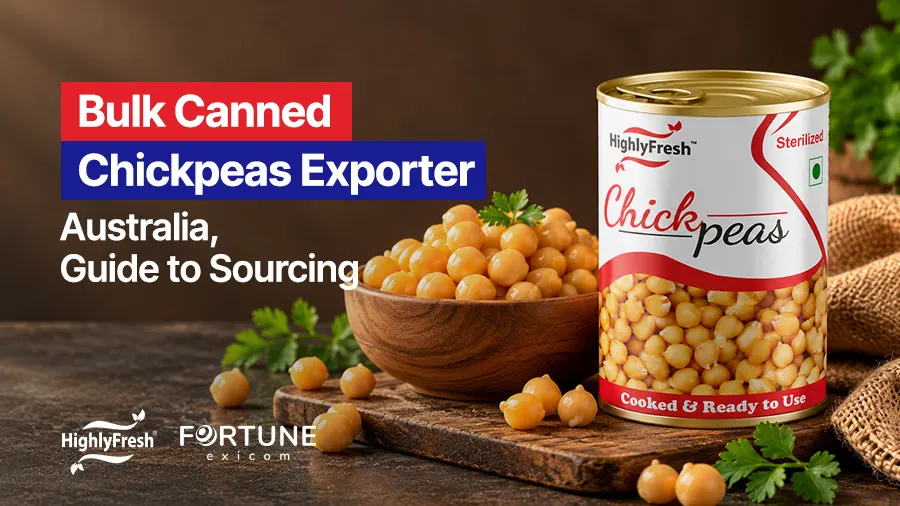
Australian food importers, wholesalers, restaurant suppliers, and retailers need dependable sources of canned chickpeas for regular business orders. Choosing a canned chickpeas exporter in Australia or an overseas supplier requires careful checks of product specifications, packing, food safety records, shipping terms, and total delivered cost.
India is one sourcing option for businesses looking to purchase canned chickpeas for the Australian market. Before placing an order, buyers should confirm the product format, net weight, drained weight, ingredients, shelf life, and documentation available for the shipment. These details help buyers compare offers on the same basis.
In this guide, we explain how Australian businesses can assess canned chickpeas suppliers, compare canned and dried chickpeas, review private label options, and prepare for importing canned chickpeas from India. We also cover questions restaurant buyers should ask before placing bulk orders.
Why Australian Businesses Buy Canned Chickpeas in Bulk
Canned chickpeas are ready to use after draining and rinsing, depending on the recipe. This can reduce preparation time for kitchens and food manufacturers. They are used in salads, curries, hummus, soups, wraps, grain bowls, and prepared meals.
Bulk purchasing may suit businesses that use chickpeas regularly or supply several retail and food service customers. Buying in larger quantities can help with stock planning, but the order size should match expected sales, storage capacity, shelf life, and cash flow.
Grocery Wholesalers and Retailers
Wholesalers may supply canned chickpeas to supermarkets, independent grocery stores, ethnic food shops, and other retailers. They should check can size, carton quantity, product labelling, barcode requirements, shelf life, and the packaging condition on arrival.
Retail buyers may need consumer sized cans with labels that meet Australian requirements. Wholesalers serving commercial kitchens may prefer larger packs. The right format depends on the customer base and expected turnover.
Restaurants and Food Service Businesses
Restaurants, caterers, and central kitchens often use chickpeas in multiple recipes. Canned product can reduce the time needed for soaking and cooking dried chickpeas. It can also make portion planning more predictable when the supplier provides consistent net and drained weights.
Before ordering, food service buyers should ask about pack size, drained weight, ingredients, storage instructions, and the expected number of servings per can. They should also consider how quickly opened cans can be used under their food safety procedures.
Food Manufacturers
Food manufacturers may use canned chickpeas in prepared meals, sauces, salads, dips, and other packaged foods. They should confirm the required texture, chickpea size, ingredient list, salt level, and any processing requirements. A written product specification helps the buyer assess whether the product suits the intended recipe.
How to Choose a Canned Chickpeas Supplier in Australia
Australian businesses can source products through local distributors or consider direct imports from overseas exporters. Each route has different costs, lead times, stock arrangements, and responsibilities.
A local supplier may offer shorter delivery times and smaller order quantities. Direct imports may suit businesses with regular demand and the capacity to manage international shipping and import requirements. Compare both options using the same product specification and delivery point.
Check Product Specifications
Request a specification sheet before comparing quotations. It should identify the product and state the available information for:
- Chickpea type and product description
- Net weight and drained weight
- Ingredients and any added salt or other ingredients
- Can dimensions and packing per carton
- Shelf life and storage instructions
- Product quality parameters
- Relevant laboratory reports and batch records
- Country of origin and available traceability information
Do not compare products based only on the number of cans per carton. A can containing more liquid may provide less usable chickpea product than a can with a higher drained weight. Compare the price per unit of usable product when that information is available.
Review Quality and Packaging
Ask how the product is checked before dispatch and which quality records can be supplied. Review the agreed texture, colour, appearance, and drained weight. If laboratory testing is relevant to your business, agree on the required tests and acceptance criteria before confirming the order.
Cans should arrive without serious dents, leaks, swelling, or damage that could affect the package seal. Buyers should establish a process for reporting damaged goods and handling quality concerns. Keep batch details and delivery records for traceability.
Check the Supplier’s Business Details
Before paying a deposit or issuing a purchase order, verify the supplier’s legal business name, contact details, bank beneficiary, and commercial terms. Ask for references or relevant export records where appropriate. Review the quotation and contract carefully, including the product specification, payment schedule, delivery terms, and process for handling disputes.
For company information, visit Fortune Exicom’s About Us page. Australian buyers can also review the available canned chickpeas product details before submitting an enquiry.
Canned Chickpeas vs Dried Chickpeas
Canned and dried chickpeas serve similar food applications, but they require different storage and preparation methods. The right option depends on kitchen labour, available storage, recipe needs, purchase price, and expected usage.
| Factor | Canned chickpeas | Dried chickpeas |
|---|---|---|
| Preparation | Ready to use after draining and rinsing, as required | Usually need sorting, soaking, and cooking |
| Kitchen labour | Lower preparation time | More preparation and cooking time |
| Storage before opening | Store according to the label, usually in a cool, dry place | Store in a cool, dry place in suitable packaging |
| Storage after opening | Transfer unused contents to a suitable covered container and refrigerate promptly | Keep uncooked product dry and protected from pests |
| Cost comparison | Compare price against drained weight and usable quantity | Compare price against the cooked yield and preparation cost |
| Best fit | Kitchens needing ready to use product | Kitchens with time and equipment for batch cooking |
Preparation Time and Kitchen Costs
Canned chickpeas can save time because they are already cooked. This can help kitchens that need to prepare meals quickly or maintain consistent service during busy periods. Dried chickpeas may offer a lower purchase price per kilogram, but the final cost should account for soaking, cooking, water, energy, labour, and yield.
To make a fair comparison, calculate the cost per kilogram of usable chickpeas for both formats. For canned product, use the drained weight. For dried product, use the cooked yield from your own recipe or supplier data.
Storage and Stock Planning
Unopened canned chickpeas generally need less preparation before service, but the cans still require suitable storage. Follow the label instructions and keep stock in a clean, dry area. Dried chickpeas also require dry storage and protection from insects and moisture.
Food businesses should use stock rotation and check date markings regularly. Avoid buying quantities that exceed storage capacity or expected demand.
Private Label Canned Chickpeas for Australia
Private label products allow a business to sell canned chickpeas under its own brand, subject to supplier capability and applicable regulations. This may suit grocery brands, wholesalers, distributors, and businesses building a packaged food range.
Before requesting a private label quotation, confirm that the exporter offers the required service and can meet the proposed packaging and production requirements. Availability, order quantities, artwork support, and production schedules must be confirmed for the specific product.
Can Size and Packaging
Start by defining the intended customer and sales channel. Retail shelves may call for smaller consumer cans, while food service customers may prefer larger packs. The appropriate can size should be based on the serving format, product use, storage needs, and target selling price.
Ask the supplier to confirm the available can sizes, net weight, drained weight, carton configuration, and pallet details if relevant. Also confirm the packaging material and how the cans will be protected during transport.
Label Artwork and Food Information
Australian food labels must meet the rules that apply to the product. Depending on the product and its sale format, required information may include the product name, ingredients, nutrition information, net quantity, lot identification, date marking, storage instructions, and country of origin information.
Review the applicable Food Standards Australia New Zealand (FSANZ) requirements and country of origin labelling rules before approving artwork. Do not print a commercial label until the importer or responsible business has confirmed that the content meets the relevant requirements.
Private Label Order Planning
A private label project may require artwork approval, packaging confirmation, production planning, and review of a finished sample. Ask the supplier about minimum order quantities, available packaging options, costs for artwork or packaging changes, and estimated production time.
Put all approved details in writing. The agreement should identify the product, label version, packing format, quantity, price, payment terms, and expected delivery schedule.
For information about Fortune Exicom’s available service, visit the private labelling page and confirm the current options with the export team.
How to Import Canned Chickpeas from India to Australia
Importing canned chickpeas involves supplier selection, product checks, shipping arrangements, customs procedures, and Australian food import compliance. Requirements depend on the exact product and shipment. Buyers should verify the applicable conditions before placing an order or arranging dispatch.
Step 1: Confirm the Product and Import Conditions
Identify the product accurately, including the chickpeas, processing method, ingredients, packaging, and country of origin. Check the Australian Department of Agriculture, Fisheries and Forestry’s food import guidance.
Use the Australian Government’s BICON database to check applicable biosecurity conditions for the specific product. Do not assume that conditions for raw chickpeas are the same as those for commercially processed canned chickpeas.
Step 2: Check Food Safety and Labelling Rules
Imported food must meet the applicable Australian food safety and labelling requirements. The importer should confirm the rules for the product and intended market, including any applicable requirements under the Imported Food Inspection Scheme.
Review the Food Standards Australia for relevant food standards and the Australian country of origin food labelling guidance for applicable claims.
The importer should also confirm any licensing, customs, documentation, and inspection requirements that apply to the business and shipment. A customs broker or qualified regulatory adviser can help clarify these requirements.
Step 3: Prepare Shipping Documents
The document list depends on the transaction, shipping method, and applicable import conditions. Documents may include:
- Commercial invoice
- Packing list
- Bill of lading or other transport document
- Product specification and relevant quality records
- Certificate of origin, if required or agreed
- Other documents required by the authorities or buyer
Confirm the required documents with your customs broker before dispatch. Ensure that the product description, quantity, packing details, and business information match across the shipment records.
Step 4: Plan Freight and Delivery
Canned food is heavy and requires suitable packing for international transport. Buyers should compare the quoted freight, insurance, export handling, destination charges, customs brokerage, and local delivery costs. The shipping plan should also account for the order quantity and available storage space.
Agree on the delivery terms and named locations in the quotation. Confirm which costs the supplier will pay and which costs remain the buyer’s responsibility. This helps avoid confusion when the shipment reaches Australia.
Canned Chickpeas for Restaurants and Catering
Restaurants and catering businesses often need products that fit their recipes, service volumes, and storage arrangements. Canned chickpeas can be used in salads, curries, hummus, wraps, soups, and prepared meals. The most suitable pack size depends on the number of servings and how quickly the product will be used after opening.
Calculate Cost Per Serving
Restaurant buyers should compare cans by drained weight rather than net weight alone. The liquid in the can contributes to net weight but is not always part of the finished recipe. Use the drained weight to estimate the quantity available for cooking.
For example, if a can contains 400 grams of net product and 240 grams of drained chickpeas, cost calculations for a chickpea based recipe should use the 240 gram drained amount. These figures are an illustration only; use the actual label values for the product being considered.
Check Storage After Opening
Once a can is opened, follow the product instructions and your food safety procedures. Transfer unused chickpeas to a clean, suitable covered container, refrigerate promptly, and use within the period specified by the manufacturer or your food safety plan. Do not store opened cans in a way that conflicts with product instructions or local food safety requirements.
Restaurants should also train staff to record opening dates and rotate stock. Discard product that shows spoilage or has been stored outside safe conditions.
How to Compare Supplier Quotes and Landed Costs
The lowest quoted can price does not always produce the lowest total cost. Importers should compare the product specification, net and drained weight, carton quantity, shipping terms, and destination charges before selecting a supplier.
A landed cost estimate may include:
- Product price
- Export packing and handling
- Inland transport in India
- International freight
- Cargo insurance
- Customs brokerage and applicable import charges
- Port handling and local delivery
- Warehousing, if required
Ask suppliers to state the quotation currency, order quantity, packing details, payment terms, and delivery terms. If the quotation uses FOB or CIF, confirm the named port and applicable Incoterms version. Compare quotations using the same destination and cost assumptions.
Also check the expected order schedule, available shelf life at dispatch, and the process for handling damaged goods or quality concerns. A written agreement helps both parties understand the order requirements.
Why Consider Fortune Exicom for Canned Chickpeas?
Fortune Exicom supplies food products for export markets under its business and product portfolio, including the HighlyFresh brand. Australian buyers can review the company’s canned chickpeas product information and contact the team to discuss their requirements.
Before confirming an order, buyers should request the current product specification, available pack formats, order quantity requirements, relevant quality documents, and shipping terms. Any private label request should also include the intended can size, label requirements, destination, and expected order volume.
To help the team assess your enquiry, include:
- Company name and contact details.
- Required product and intended use.
- Estimated order quantity and frequency.
- Preferred can size and drained weight.
- Private label or standard packaging requirements.
- Australian delivery destination.
- Required documents and quality specifications.
- Preferred delivery terms and target schedule.
Visit the Fortune Exicom contact page to submit an enquiry. Confirm current product availability and commercial terms directly with the export team.
Request a Bulk Canned Chickpeas Export Quote
Sourcing canned chickpeas for Australia requires clear product specifications, supplier checks, suitable packing, and advance review of import requirements. Buyers should compare quotations using drained weight, total delivered cost, quality documentation, and agreed shipping terms.
If your business is looking for a bulk canned chickpeas exporter for the Australian market, contact Fortune Exicom with your order quantity, preferred pack size, destination, and private label requirements. The export team can review your enquiry and confirm the available options.
Frequently Asked Questions
Who is a reliable Canned Chickpeas exporter in Australia?
A reliable Canned Chickpeas exporter in Australia should provide consistent product quality, food-grade packaging, export documentation, competitive pricing, and dependable bulk supply. Australian buyers can source canned chickpeas directly from Indian manufacturers like Fortune Exicom to meet their import requirements.
Can Australian businesses import canned chickpeas from India?
Australian businesses may import eligible canned chickpea products when they meet applicable biosecurity, food safety, labelling, and customs requirements. Check BICON and relevant Australian food import guidance for the exact product before shipment.
What should buyers check when choosing a canned chickpeas supplier?
Review the product specification, ingredients, net and drained weight, shelf life, packaging, quality records, traceability, quotation, and delivery terms. Ask for a sample or additional product details if needed before placing a bulk order.
Can canned chickpeas be sold under a private label in Australia?
Private label supply may be available from some exporters, subject to their capabilities and commercial terms. Buyers should confirm minimum quantities, packaging options, artwork approval, production schedules, and Australian labelling requirements.
Are canned chickpeas suitable for restaurants?
Yes, canned chickpeas can suit restaurant and catering use because they are ready to use after draining and rinsing as required. Choose pack sizes based on recipe needs, daily usage, storage capacity, and cost per serving.
Are canned chickpeas better than dried chickpeas?
Neither format is best for every business. Canned chickpeas reduce preparation time, while dried chickpeas may offer a lower purchase price per kilogram. Compare usable yield, labour, cooking costs, storage, and product requirements.
What documents should Australian importers check before shipping?
Depending on the shipment, documents may include a commercial invoice, packing list, transport document, product specification, relevant quality records, and any required certificate or declaration. Confirm the final list with your customs broker and relevant authorities.

