
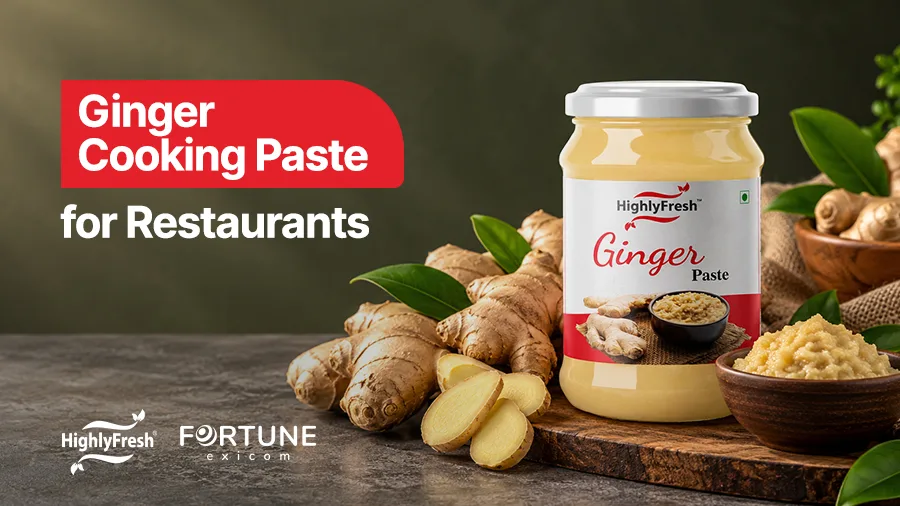
Ginger Cooking Paste for Restaurants can help commercial kitchens reduce ingredient preparation time and maintain consistent quantities across recipes. Restaurants, hotels, caterers, and food service companies often use ginger in curries, gravies, marinades, sauces, soups, and rice dishes. Prepared ginger paste can reduce the need to peel, chop, and crush fresh ginger for every service.
Choosing the right product requires more than comparing prices. Buyers should review the ingredient list, texture, flavour, pack size, storage instructions, shelf life, and supplier documentation. The product must also suit the kitchen’s recipes and daily usage.
In this guide, we explain how restaurants can compare fresh ginger with prepared paste, assess a bulk ginger paste supplier, manage storage, and source commercial quantities from India. We also cover private label options for distributors and food businesses.
Why Restaurants Use Ginger Cooking Paste
Ginger is a common ingredient in many restaurant kitchens. It adds a distinctive flavour to curries, sauces, marinades, soups, stir fries, and other prepared dishes. Preparing fresh ginger for every order can require staff time, equipment, and additional cleaning.
Prepared ginger paste gives kitchen teams another option. It arrives ready for use according to the product instructions, reducing the preparation required before cooking. The actual time saved depends on the kitchen’s volume, recipe process, and the product selected.
1. Reduced Preparation Work
Fresh ginger often needs washing, peeling, trimming, chopping, or crushing before use. These steps take time, particularly in kitchens preparing large batches of food.
Using a prepared paste can reduce some of this work. Staff can measure the required amount and add it to the recipe at the appropriate stage. This can help kitchens organise prep tasks during busy service periods.
2. Consistent Recipe Measurements
A written recipe helps chefs maintain the same ingredient quantities across batches. Prepared paste can make portion measurement more convenient than handling whole ginger for every recipe.
For reliable results, kitchens should test the paste in their own dishes before switching from fresh ginger. Different products may vary in flavour intensity, texture, moisture, and ingredient composition. Recipe quantities may need adjustment after testing.
3. Better Preparation Planning
Prepared cooking paste can help purchasing teams plan ingredient usage by pack size and expected consumption. A kitchen that uses ginger paste daily may find it easier to estimate weekly requirements from its recipe records.
However, buying in bulk only makes sense when the quantity can be stored correctly and used within the manufacturer’s stated period. Large orders should match actual demand, storage capacity, and delivery schedules.
Fresh Ginger vs Ginger Paste for Restaurants
Fresh ginger and prepared ginger paste both have a place in commercial kitchens. The right choice depends on the dish, flavour requirements, staff time, storage arrangements, and cost per usable portion.
| Factor | Fresh ginger | Prepared ginger paste |
|---|---|---|
| Preparation | Requires handling, trimming, and crushing or chopping | Ready for use according to product instructions |
| Staff time | More preparation work | Can reduce preparation steps |
| Texture | Can be sliced, grated, or chopped to suit a dish | Usually has a smooth or finely processed texture |
| Flavour | Fresh aroma and texture can be adjusted by preparation method | Flavour depends on the recipe, processing, and ingredients |
| Portion control | Requires weighing or measuring after preparation | Can be measured directly from the pack |
| Storage | Requires suitable fresh produce storage | Storage depends on packaging and product instructions |
| Waste | Trimming and unused fresh produce may create waste | Opened product may be wasted if the pack is too large |
| Cost comparison | Include purchase price, trimming loss, and staff time | Include purchase price, usable quantity, and storage costs |
When Fresh Ginger May Be Preferable
Fresh ginger may suit dishes that require visible pieces, freshly grated texture, or a particular aroma. It also gives chefs direct control over the cut size and preparation method.
Restaurants that use small quantities or have limited demand may prefer fresh ginger to avoid opening a large pack of paste. The decision should account for the kitchen’s actual consumption and handling practices.
When Ginger Paste May Be Preferable
Prepared paste may suit kitchens that use ginger regularly in bulk recipes. It can reduce repeated preparation work and help staff measure ingredients for sauces, marinades, curries, and other dishes.
Before changing a recipe, test the paste with the intended cooking method. Check its flavour, texture, ingredient list, and performance during cooking. Do not assume that every ginger paste can replace fresh ginger in equal quantities.
Compare the Cost Per Usable Portion
The purchase price alone does not show the full cost of using an ingredient. Fresh ginger can involve trimming waste and staff time. Prepared paste can involve packaging costs, refrigeration where required, and waste from unused opened packs.
For a fair comparison, calculate the cost of the amount actually used in each recipe. Include preparation time, usable yield, storage requirements, and product waste. A kitchen trial can help purchasing teams choose a suitable option.
Common Ginger Paste Uses in Restaurants
Ginger paste can be used in many commercial recipes, provided the product is suitable for the intended dish. Check the label and recipe requirements before use, especially when the paste contains salt, acid, oil, or other ingredients.
Curries and Gravies
Ginger paste is commonly added to curry bases, gravies, and sauces. It may be combined with garlic, onion, spices, tomatoes, or other ingredients according to the recipe.
For consistent results, measure the paste and record the quantity used in each batch. Add it at the stage specified by the recipe and cook it as required for the dish.
Marinades
Some kitchens use ginger paste in marinades for vegetables, paneer, meat, poultry, or seafood. The paste can be mixed with spices, yoghurt, oil, or other ingredients according to the recipe.
Use separate handling procedures for raw animal products and ready to eat food. Follow local food safety rules for preparation, refrigeration, and cooking.
Soups and Sauces
Ginger paste can be added to soups, sauces, and dressings where its texture and flavour fit the recipe. Test the product in the finished dish before adding it to the regular menu.
If the paste contains additional ingredients, check how they affect taste, texture, and allergen information. Keep the approved ingredient specification with the kitchen’s recipe records.
Rice Dishes and Prepared Meals
Ginger paste may be used in pilafs, biryani preparations, stir fries, and other batch cooked dishes. Measuring the paste helps kitchen staff follow a standard recipe across multiple batches.
Restaurants should document the approved product and recipe quantity. If the supplier changes the formulation or product specification, review the dish before using the replacement.
How to Choose a Bulk Ginger Paste Supplier
A suitable Ginger Paste supplier should provide clear product information, reliable communication, and commercial terms that fit your business. Restaurant groups, hotel kitchens, and food service distributors should review the same key details before confirming a recurring order.
Check Ingredients and Product Specifications
Ask for a current specification sheet. Review the product name, ingredients, texture, packaging, net weight, shelf life, storage conditions, and any relevant quality parameters.
If your recipes require a particular ginger concentration or a specific ingredient profile, state this in writing. Ask the supplier to confirm the requirement rather than relying on a general product description.
Request Relevant Quality Documents
The documents required depend on the buyer, destination market, product, and applicable regulations. Ask which quality reports, food safety documents, batch records, and traceability details are available.
Do not assume that a supplier holds a particular certification. Verify the document, issuing body, scope, and validity if a certification is required for your purchasing policy.
Review Packaging and Order Quantity
The pack size should match the kitchen’s consumption and storage capacity. A large pack may suit a central kitchen using ginger paste every day, while a smaller pack may be more practical for a restaurant with lower demand.
Confirm the net weight, packaging material, carton quantity, pallet details if relevant, and shipping protection. Also ask about minimum order quantities, payment terms, lead times, and delivery arrangements.
Approve the Product Before a Large Order
Where samples are available, test the paste in your regular recipes. Check flavour, texture, colour, ease of measurement, and cooking performance.
Record the approved product and its specification. For recurring orders, ask how the supplier manages batch identification and communicates any product changes. Agree on a written process for handling quality concerns or damaged deliveries.
Ginger Paste Storage for Restaurants
Correct storage helps maintain product quality and reduces food safety risks. Storage needs vary by formulation, processing method, packaging, and the manufacturer’s instructions. Do not assume that all ginger paste products can be stored at room temperature or kept for the same period after opening.
Before Opening
Store the product according to the label and supplier instructions. Keep it in the required environment and protect it from heat, moisture, pests, and package damage.
Check the packaging and date markings when deliveries arrive. Keep batch details and delivery records so the product can be traced if a concern arises.
After Opening
Follow the manufacturer’s instructions for refrigeration, handling, and use after opening. Use clean utensils and avoid introducing water or other ingredients into the original container unless the instructions permit it.
If the product requires refrigeration after opening, return it to the required storage conditions promptly. Do not leave containers open on a preparation counter longer than permitted by your food safety procedures.
Date Marking and Stock Rotation
Label opened containers according to your kitchen’s food safety system. Record the opening date where required and follow the manufacturer’s stated use period.
Use stock rotation so older suitable stock is used before newer stock. Discard products that show package damage, unexpected changes, mould, unusual odour, or other signs of spoilage. Do not taste a product to decide if it is safe.
For restaurants operating in Australia, India, Canada, or another market, follow the applicable local food safety rules. The FDA Food Code is a useful reference for US retail food service, but it is not a substitute for local requirements elsewhere.
How to Source Ginger Paste from India
India is a sourcing option for commercial cooking paste buyers. Businesses considering imports should compare the product specification, packing, shipping terms, documents, and total delivered cost before confirming an order.
Verify the Exporter
Check the supplier’s legal business name, contact details, product information, and written commercial terms. Ask for relevant export records or business references where appropriate.
Make sure the product specification matches your intended use. Confirm the available packing format, order quantity, shelf life at dispatch, and any required documentation before issuing a purchase order.
Confirm Export and Import Documents
The documents needed depend on the product, country of destination, shipping method, and applicable rules. They may include a commercial invoice, packing list, transport document, product specification, batch records, and certificates or declarations required for the particular shipment.
Ask your customs broker or qualified regulatory adviser to confirm the requirements for your destination market. Do not rely on a general document list as proof that every requirement has been met.
Compare the Total Delivered Cost
An export quotation may cover the product price and some shipping costs, depending on the agreed delivery terms. Other costs may include export handling, international freight, insurance, customs brokerage, port charges, duties or taxes where applicable, and local delivery.
Request a written quotation that states the currency, order quantity, packing, delivery terms, payment schedule, and estimated dispatch timing. Compare suppliers using the same specification and destination assumptions.
Private Label Ginger Paste Supplier: What Buyers Should Ask
Private label supply may suit food distributors, retail brands, wholesalers, and restaurant supply companies that want to sell a product under their own brand. Availability depends on the supplier’s services and commercial terms, so confirm the options for the specific product.
Before starting a private label project, discuss the following:
- Available pack sizes and packaging formats
- Minimum order quantity
- Product specification and ingredient list
- Label artwork and approval process
- Applicable nutrition and labelling requirements
- Packaging costs and any artwork charges
- Production schedule and dispatch expectations
- Quality records and batch traceability
The buyer should review the proposed label against the destination market’s requirements before approving printing. Keep the approved artwork, product specification, and order details on file. Any change to the ingredients, pack size, or label should be reviewed before the next order.
Fortune Exicom lists cooking paste products under its cooking paste product category. Buyers can review the available product information and contact the export team to confirm current options. For company background, visit About Fortune Exicom.
Request a Ginger Paste Quote from Fortune Exicom
Choosing ginger cooking paste for a commercial kitchen requires clear product specifications, suitable packaging, correct storage, and reliable supply arrangements. Buyers should test the product in their own recipes and compare the total cost of use rather than looking at purchase price alone.
If your business needs bulk ginger paste for restaurants, food service distribution, or private label supply, contact Fortune Exicom with your estimated quantity, preferred pack size, destination, and product requirements. The team can review your enquiry and confirm the options currently available.
Frequently Asked Questions
Why should restaurants use Ginger Cooking Paste for Restaurants?
Ginger Cooking Paste for Restaurants helps commercial kitchens save preparation time and maintain consistent flavour across dishes. It is convenient for restaurants, catering services, and food businesses preparing curries, sauces, marinades, and other ginger-based recipes.
Is ginger paste suitable for restaurant kitchens?
Prepared ginger paste can suit restaurant kitchens that use ginger regularly in curries, sauces, marinades, soups, and other dishes. Test the product in your recipes and check the ingredients, pack size, and storage instructions before regular use.
Can ginger paste replace fresh ginger in every recipe?
No. Some recipes require fresh ginger for its texture, cut size, or particular flavour. Prepared paste may suit sauces, marinades, and batch cooked dishes, but chefs should test the product and adjust quantities as needed.
How should restaurants store ginger paste?
Follow the manufacturer’s instructions for unopened and opened packs. Some products may require refrigeration after opening, while others may have different requirements. Use clean utensils, record opening dates where required, and follow local food safety procedures.
What should a restaurant ask a commercial ginger paste supplier?
Ask for the product specification, ingredient list, pack size, storage instructions, shelf life, relevant quality documents, order quantity, pricing, and delivery terms. Request a sample where available and confirm the process for handling product concerns.
Can an Indian supplier provide private label ginger paste?
Some suppliers may provide private label services, subject to their capabilities and commercial terms. Confirm packaging formats, order quantities, label approval, product specifications, and destination market requirements before proceeding.
How can restaurants compare fresh ginger with prepared paste on cost?
Calculate the cost per usable portion. For fresh ginger, include trimming waste and staff time. For paste, include the purchase price, storage needs, pack size, and any unused product that may be discarded.

