
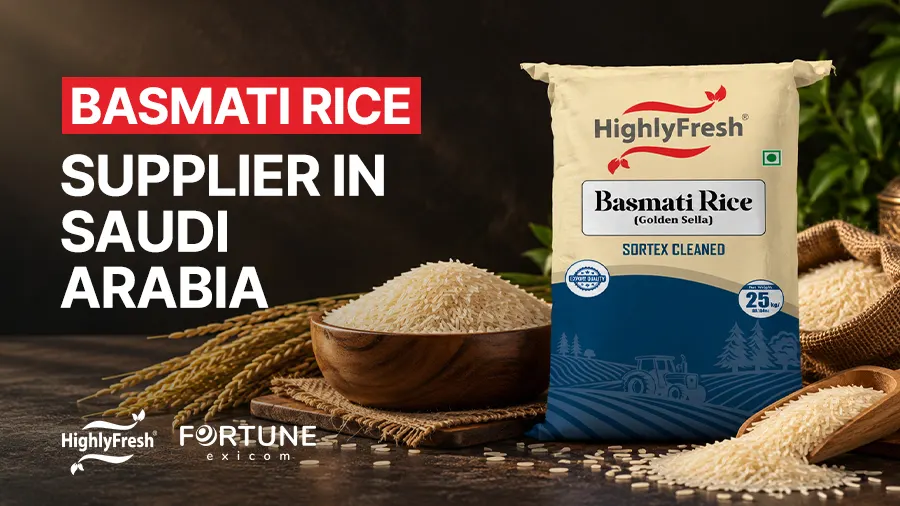
Finding a basmati rice supplier in Saudi Arabia can be the first step toward a steady supply of Indian rice for wholesale, retail, and food service. But the right choice depends on more than the price per tonne. Buyers need to check rice grades, grain quality, packing, import rules, shipment terms, and the supplier’s ability to fill repeat orders.
We recommend comparing suppliers against the same product details before asking for a final quote. This guide explains how Saudi importers can source Basmati rice from India, compare 1121 Golden Sella and 1509 varieties, check key documents, and prepare a clear bulk order request.
How to Choose a Basmati Rice Supplier in Saudi Arabia
A good supplier should give clear answers about the product, its source, packing, and shipping terms. Buyers should also check if the rice processing site meets the current Saudi import rules. Before making a payment, ask for the product specification, a sample, a recent test report, and the documents needed for your order.
We suggest checking these points first:
- Rice type and grade
- Grain length and broken percentage
- Moisture and foreign matter limits
- Processing method and crop year
- Bulk and retail packing options
- Minimum order quantity (MOQ)
- Food safety records and export documents
- Lead time and repeat supply capacity
Direct mill, merchant exporter, or trading firm?
A rice mill may handle processing and packing, while a merchant exporter may source rice from a registered mill and manage the export order. A trading firm may offer several grades from more than one source. The right fit depends on the buyer’s needs, but the name on the quote alone does not prove that the rice site meets Saudi rules.
Ask which site will process or pack the rice, who will issue the documents, and which firm will appear on the trade papers. For shipments to Saudi Arabia, check the current APEDA list of rice establishments registered with the Saudi Food and Drug Authority (SFDA). APEDA’s rice export guidance states that Saudi shipments must meet the listed food safety conditions, and merchant exporters need the required certificate from an SFDA-accredited rice establishment. APEDA rice export requirements
Why Source Basmati Rice from India?
India is a key source of Basmati rice for Saudi buyers. APEDA’s cereal trade data lists Saudi Arabia among India’s major cereal export destinations, with a 9.1% share in 2025 to 2026. This shows the value of the Saudi market for Indian cereal trade, but it does not mean every rice grade or supplier is right for each buyer. Buyers should match the product to their sales channel, customer needs, and price range. APEDA cereal trade data
Indian suppliers can offer several Basmati types, including 1121, 1509, and 1718, in forms such as Steam, Golden Sella, and other parboiled grades. Each type can differ in grain traits, color, cooking results, and price. We advise buyers to ask for a sample and written product details rather than choosing only by the variety name. This helps the buyer compare offers on the same basis.
Which Basmati Rice Varieties Suit Saudi Buyers?
The right grade depends on the use, target price, and cooking needs of the end buyer. A wholesaler supplying restaurants may want a different grade from a retailer selling small packs. The table below gives a starting point for product talks, but the supplier’s actual specification and sample should guide the final choice.
| Rice variety | Common form | What buyers should check |
|---|---|---|
| 1121 Basmati | Steam, Golden Sella, White Sella | Grain length, cooking elongation, broken level, color |
| 1509 Basmati | Steam, Sella, other offered grades | Price, grain traits, cooking result, grade consistency |
| 1718 Basmati | Steam or Sella, based on supplier range | Grain details, aroma, processing type, sample result |
| Traditional Basmati | Raw or other offered forms | Aroma, grain traits, crop and aging details |
These are general buying notes, not a guarantee of the traits of any batch. Ask the supplier to state the variety, processing type, crop year, aging period if relevant, and agreed test limits in writing. For a repeat order, keep the approved sample and specification as a reference. This gives both sides a clear standard for later shipments.
1121 Golden Sella Basmati Rice
1121 Golden Sella is a parboiled Basmati type known for its golden tone and long grain. Buyers often review it for bulk supply to food service and retail channels. The best way to judge a grade is to test the actual batch for grain size, broken level, cooking time, and final texture. Ask the supplier to confirm these details in its product sheet and sample.
1121 Steam Basmati Rice
1121 Steam is processed with steam rather than the same parboiling steps used for Sella rice. The finished grain may differ in color and cooking behavior. Buyers should test the grade using the cooking method common in their kitchens or target market. Ask for a sample from the lot being quoted, not just a photo of a past batch.
1509 Basmati Rice
1509 Basmati can suit buyers looking for a long-grain product at a different price point from some 1121 grades. Price alone should not decide the purchase. Compare grain length, broken percentage, moisture, color, and cooking results against the buyer’s product needs. The supplier should state the grade and processing type clearly on the quote.
Quality Specifications to Check Before Buying Bulk Basmati Rice
A product specification helps buyers compare offers from different suppliers. It should state the grade, processing type, grain details, moisture limit, broken percentage, foreign matter limit, and any agreed test requirements. We recommend asking for the same details from every supplier so the quotes can be compared fairly. A claim such as “premium rice” is not a substitute for a written specification.
| Quality point | What to request | Why it matters |
|---|---|---|
| Variety and grade | Exact variety and processing type | Confirms the product being sold |
| Grain length | Test method and stated length | Helps compare grades |
| Broken grains | Agreed percentage | Affects pack appearance and use |
| Moisture | Test result and agreed limit | Supports storage and transport |
| Foreign matter | Stated limit | Checks cleaning quality |
| Color and appearance | Sample and grade details | Helps assess batch consistency |
| Aroma and cooking result | Sample test | Checks fit for the intended use |
| Residue and food safety tests | Reports required for the destination | Supports import compliance |
| Packing | Bag material, weight, and label details | Helps protect the product in transit |
Do not assume that all suppliers use the same test method or grade rules. Ask which lab performed the test, the date of the test, and the batch number shown on the report. If the buyer needs a specific limit, add it to the purchase order. This reduces the chance of a dispute after shipment.
Why sample approval matters
A sample lets the buyer check the rice before placing a large order. Test the grain, color, cleanliness, aroma, cooking time, and final texture using a method that matches the end use. For a retail product, also review the pack, label, and net weight. Once approved, keep a sample and a copy of the specification for future checks.
Saudi Arabia’s Rice Import Rules and Documents
Saudi food imports must meet the current rules set by the Saudi Food and Drug Authority. The SFDA states that food importers must register their business and food items through its systems, and the imported goods must meet Saudi rules and standards. The importer should confirm the current process before shipment, since the required documents can depend on the product and trade case. SFDA food import requirements
For Indian rice, the supplier and buyer should confirm the current APEDA requirements and the status of the rice establishment. APEDA publishes updated lists of Indian rice establishments registered with the SFDA, so buyers should check the latest list rather than relying on an old copy. The buyer should also confirm which party will provide each document and which details must match across the invoice, packing list, and transport papers. Do not book the shipment until both sides have agreed on the document set.
Documents to discuss before shipment
The exact list should be confirmed by the Saudi importer and the exporter. Depending on the shipment, the papers may include:
- Commercial invoice
- Packing list
- Certificate of origin
- Bill of lading
- Health certificate
- Phytosanitary certificate, where required
- Certificate of Analysis (COA)
- Other certificates or papers required by Saudi authorities
The SFDA’s food clearance guidance lists documents such as a certificate of origin, commercial invoice, bill of lading, health certificate, and phytosanitary certificate among the general food clearance papers. The buyer should check the current rules for rice and the specific shipment before relying on this list. SFDA food clearance requirements
Check the rice establishment before paying
For Saudi orders, do not check only the seller’s company name. Ask for the name and details of the mill or rice establishment that will supply the goods. Then compare these details with the latest APEDA list of registered rice establishments for Saudi Arabia. If the supplier uses a merchant exporter, ask for the required certificate from the approved establishment that supplied the rice.
This check should take place before the purchase order is final. A supplier may have export experience in other markets, but Saudi shipments have their own conditions. The buyer should confirm that the exact product and source meet the current rules for the intended shipment.
Bulk Basmati Rice Packing for Saudi Arabia
Packing should fit the buyer’s sales channel and storage needs. Wholesale buyers may need large bags for local distribution, while supermarkets may need retail-ready packs. Ask the supplier for bag material, available sizes, liner options, print options, and the way the bags will be loaded. The quote should state which packing items are included in the price.
Wholesale and food service bags
Bulk buyers may request 5 kg, 10 kg, 25 kg, or 50 kg bags, based on the supplier’s range and the needs of the buyer. These sizes are examples, not a promise that every supplier offers them. Confirm the bag material, stitching, weight tolerance, and pallet or container loading plan before placing the order. Ask for photos or a sample bag if pack quality is a key buying point.
Retail and private-label packs
Private-label supply lets a buyer sell rice under its own brand. The buyer and supplier should agree on pack size, artwork, product name, net weight, origin details, date marks, batch details, and any nutrition or label information required for the Saudi market. Have the final label checked before printing. Changes after printing can add cost and delay dispatch.
How to Compare FOB and CIF Basmati Rice Quotes
A quote is useful only if it covers the same product and trade terms as the other offers. FOB and CIF prices include different cost items, so comparing the numbers alone can lead to a poor decision. Ask each supplier to quote the same grade, packing, quantity, and shipment basis. Also ask for the quote validity period and the planned dispatch date.
| Cost item | What to confirm |
|---|---|
| Rice price | Price per tonne and exact grade |
| Packing | Bag size, material, printing, and labels |
| Inland transport | Which party pays to move goods to the load port |
| Export charges | Which costs are included in the quote |
| Ocean freight | Rate, route, and validity period |
| Insurance | Included or arranged by the buyer |
| Destination charges | Port and local fees that may be outside the quote |
| Payment terms | Advance, balance, and payment method |
| Delivery schedule | Ready date and estimated transit time |
The final landed cost depends on the agreed Incoterm, destination port, duty and tax rules, insurance, and local charges. Ask the supplier to list what is included and what is not. Do not rely on an estimate of freight or arrival time without checking its date and basis. For a large order, the buyer may also want an independent check of the trade terms before sending funds.
How to Verify a Basmati Rice Exporter from India
A supplier check should cover the firm, the product, and the actual source of the rice. First, ask for the legal company name, address, export details, and the site that will process or pack the order. Then review the product specification, sample, and current test reports. For Saudi orders, confirm the rice establishment’s status using the latest APEDA list.
Next, ask about past supply to buyers with similar needs. A supplier’s own claims are useful as a starting point, but they should be supported by documents and clear answers. Confirm the MOQ, lead time, packing capacity, payment terms, and how the supplier will handle a quality concern. For a first order, a smaller trial shipment may help both sides test the process before they agree on larger repeat orders.
Red flags to watch for
Be careful if the supplier cannot provide a clear product sheet or refuses a sample without a sound reason. Other warning signs include unclear packing costs, vague payment terms, missing test reports, and no clear answer about the source of the rice. A quote far below other offers should be checked closely, especially if it does not list the grade and shipment terms. Keep the written quote, sample approval, specification, and purchase order together as the record for the order.
Questions to Ask a Bulk Basmati Rice Supplier
Before you confirm a bulk order, ask:
- Which Basmati variety and processing type are you quoting?
- What are the grain length, moisture, and broken limits?
- Can you send a sample from the lot being quoted?
- Can you provide a recent COA and batch details?
- Which rice establishment will process or pack the order?
- Is the establishment on the current APEDA list for Saudi Arabia?
- What is the MOQ for this grade and packing?
- Which bag sizes and private-label options are available?
- What is the lead time from order approval to dispatch?
- Which documents will you provide for Saudi import clearance?
- Are you quoting FOB, CIF, or another agreed term?
- Which costs are excluded from the quote?
- What are the payment terms?
- Can you support repeat orders with the same grade?
- How will a quality claim be handled?
These questions give the buyer a fair basis for comparing suppliers. They also help show if the supplier understands the product and the destination requirements. Ask for answers in writing, especially for grade limits, packing, and shipment terms. Add agreed details to the purchase order before payment.
How to Request a Quote for Basmati Rice Export to Saudi Arabia
A clear request for quotation (RFQ) helps the supplier give a useful price. Include the variety, processing type, quantity, grade, packing, destination port, trade term, and required documents. If the order is for a retail brand, attach the pack size and label needs. This cuts down on extra questions and makes supplier quotes easier to compare.
Use this template for your inquiry:
Subject: Bulk Basmati Rice Inquiry for Saudi Arabia
- Product: 1121 Golden Sella / 1121 Steam / 1509 / other
- Required quantity: ___ metric tonnes
- Grade and product spec: ___
- Packing size and type: ___
- Private-label packing: Yes / No
- Destination port: Jeddah / Dammam / other
- Trade term: FOB / CIF / other
- Required documents: ___
- Target shipment date: ___
- COA and sample needed: Yes / No
Ask the supplier to confirm the quote validity, ready date, packing cost, and excluded charges. For Saudi shipments, ask for the details of the rice establishment and confirm its status before approving the order. Keep the final quote and product specification as part of the purchase record. This makes it easier to review the order if questions arise later.
Final Checklist for Saudi Basmati Rice Buyers
Before choosing a supplier, check each item below. This list can be used to compare three or more offers side by side. It should be completed before the purchase order is approved, not after the shipment is booked. The final decision should be based on product fit, verified documents, total cost, and the supplier’s ability to meet the order terms.
| Buyer check | Status |
|---|---|
| Variety and grade confirmed | ☐ |
| Product specification received | ☐ |
| Sample approved | ☐ |
| COA reviewed | ☐ |
| Rice establishment checked on current APEDA list | ☐ |
| Saudi import requirements confirmed | ☐ |
| Packing and label approved | ☐ |
| MOQ and supply date confirmed | ☐ |
| FOB/CIF basis and excluded costs clear | ☐ |
| Payment terms agreed | ☐ |
| Shipment documents agreed | ☐ |
| Repeat supply plan discussed | ☐ |
Contact Fortune Exicom for Bulk Basmati Rice Supply
Choosing a basmati rice supplier in Saudi Arabia starts with clear product needs and a careful supplier check. Buyers should compare 1121 Golden Sella, 1121 Steam, 1509, and other suitable Indian grades by their written specifications and sample results. They should also confirm the current Saudi import rules, the status of the rice establishment, packing, shipment terms, and total cost before making a purchase.
Fortune Exicom supplies Indian food products for international buyers and can discuss Basmati rice requirements for bulk and private-label orders. Share your preferred variety, quantity, pack size, destination port, and required documents so the team can review your request. Visit the Basmati rice product page or contact Fortune Exicom to start a supply inquiry.

