
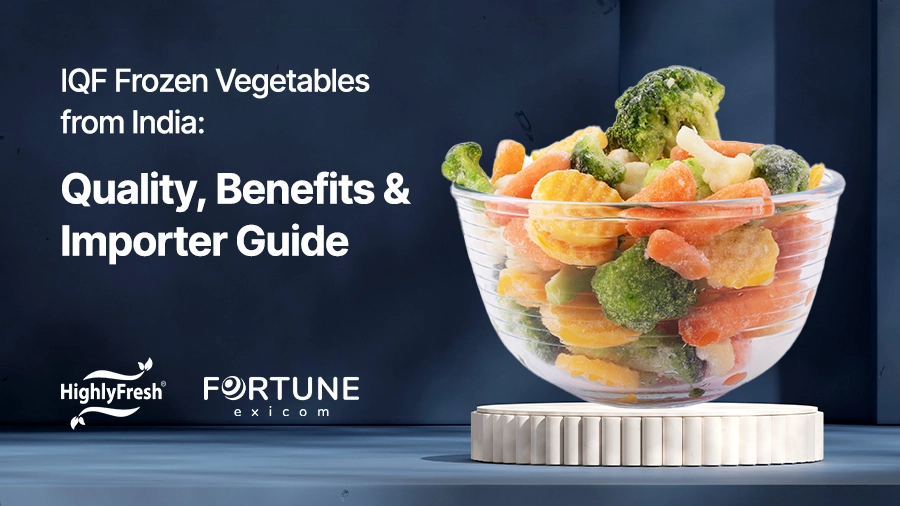
Frozen vegetables have become an important part of global food supply chains. Restaurants, caterers, retailers and food manufacturers need ingredients that are consistent, easy to store and available throughout the year. This is why IQF Frozen Vegetables from India are gaining attention in international markets.
India has a large agricultural base and produces a wide range of vegetables across different seasons. Modern processing facilities now allow suppliers to freeze produce soon after harvest, helping protect its colour, texture and nutritional value.
For importers, the opportunity is strong. However, product quality depends on the supplier’s processing methods, food-safety controls, packaging and cold-chain management. These areas should be reviewed carefully before placing a bulk order.
What Is IQF Technology?
IQF stands for Individually Quick Frozen. It is a process in which each piece of vegetable is frozen separately instead of being frozen together in a solid block.
The vegetables move through a freezing tunnel on a conveyor belt while extremely cold air circulates around them. Because freezing happens quickly, only small ice crystals form inside the food.
This provides several benefits:
- Pieces remain loose and easy to portion
- Texture is better protected
- Natural colour is retained
- Less moisture is lost during cooking
- Only the required quantity needs to be removed
Indian IQF technology is commonly used for green peas, sweet corn, carrots, beans, cauliflower and specialty vegetables.
How IQF Helps Maintain Quality
The speed of freezing makes a major difference.
When vegetables freeze slowly, large ice crystals can form inside their cells. These crystals may damage the structure of the vegetable, causing it to become soft or watery after thawing.
IQF processing limits this damage by freezing the product rapidly. It does not make frozen produce identical to freshly harvested vegetables, but it helps maintain quality for a much longer period.
A good IQF product should have:
- Even shape and size
- Natural colour
- Minimal surface ice
- Clean aroma
- Firm texture after cooking
- Little or no clumping
Importers should always cook and test product samples before approving a supplier.
Why India Is a Strong Source Market
India has varied climates, fertile growing regions and a broad range of agricultural products. This allows frozen vegetable exporters in India to supply both commonly used vegetables and products for ethnic food markets.
Processing facilities are also being developed closer to farming areas. Shorter travel time between harvesting and freezing can help maintain better product quality.
Indian suppliers commonly offer:
- Bulk food-service packs
- Retail-ready packaging
- Private-label options
- Custom vegetable mixes
- Different cuts and grades
However, quality may differ from one processor to another. Buyers should check the factory, production systems and export experience rather than choosing a supplier only by price.
Popular Frozen Vegetables from India
Frozen Green Peas
Green peas are among the most popular frozen exports from India. Good-quality peas should have a bright colour, tender texture and reasonably consistent size.
They are commonly used in:
- Curries
- Rice dishes
- Soups
- Snacks
- Ready meals
Frozen Sweet Corn
IQF sweet corn is widely used by restaurants, retailers and food manufacturers. Each kernel remains separate, making it easy to portion.
It works well in salads, soups, pizza toppings, snacks and frozen meal products.
Mixed Vegetables
Mixed vegetable packs usually contain peas, carrots, beans, cauliflower or sweet corn. They reduce preparation time and provide consistent portions for commercial kitchens.
Suppliers may also customise the mix based on the buyer’s recipe or market.
Specialty Indian Vegetables
India can also supply vegetables that may be difficult to source fresh in other countries.
Common options include:
- Okra
- Drumsticks
- Bitter gourd
- Pointed gourd
- Ivy gourd
These products are especially useful for ethnic retailers, restaurants and food brands.
Benefits for International Importers
Year-Round Availability
Frozen produce reduces dependence on local seasons. Importers can maintain a more stable supply throughout the year.
Lower Preparation Time
Most IQF products are cleaned, trimmed and cut before freezing. This reduces washing, peeling and chopping in commercial kitchens.
Better Inventory Control
Businesses can remove only the quantity they need and keep the remaining stock frozen. This makes portion and stock management easier.
Consistent Product Size
Uniform cuts are important for restaurant chains, catering companies and ready-meal manufacturers. They improve cooking consistency and presentation.
Reduced Food Waste
Fresh vegetables can spoil quickly. Frozen products offer a longer storage period when maintained at the correct temperature.
How to Source Frozen Vegetables from India
Check Food-Safety Documents
Ask for certifications and reports relevant to your destination market.
These may include:
- HACCP-based food-safety controls
- ISO 22000 certification
- BRCGS certification
- Microbiological reports
- Allergen declarations
- FDA registration for US-bound products
Check that the documents belong to the facility processing your order.
Evaluate the Product
Request samples and technical specifications before placing a bulk order.
Review:
- Colour and texture
- Size and cut
- Product uniformity
- Ice glazing
- Foreign matter controls
- Pesticide testing
- Batch traceability
Samples should be tested after cooking, not just inspected in frozen form.
Review Packaging
Bulk packs are suitable for food-service and manufacturing buyers. Retail packs are better for supermarkets and private-label brands.
Confirm:
- Pack size
- Packaging material
- Seal quality
- Carton strength
- Label information
- Private-label requirements
Packaging must remain strong throughout frozen storage and international transport.
Protect the Cold Chain
Temperature control is one of the most important parts of sourcing IQF Frozen Vegetables from India.
The product should remain at the specified temperature from the processing facility to the importer’s warehouse. Refrigerated containers, or reefers, are normally used for international shipments.
Ask the supplier:
- Which temperature is maintained
- Whether data loggers are used
- How the container is pre-cooled
- How temperature changes are handled
- Which records are provided after delivery
A break in the cold chain can affect texture, safety and shelf life.
Why Choose Fortune Exicom as Your IQF Partner?
Fortune Exicom supports international buyers sourcing food products from India. Buyers considering the company for IQF vegetables should review product samples, specifications, certifications, packaging choices and logistics support.
A dependable export partner should offer:
- Clear product documentation
- Transparent communication
- Suitable packaging options
- Realistic production timelines
- Cold-chain coordination
- Regular shipment updates
The right partner helps reduce risk from production through delivery.
Conclusion
IQF Frozen Vegetables from India offer international buyers variety, convenience and year-round availability. IQF processing helps protect colour, texture and portion control, while India’s agricultural network supports a wide range of products.
Before placing an order, importers should check product samples, certifications, packaging and cold-chain systems. Price matters, but consistent quality and reliable delivery are equally important.
With proper supplier evaluation, frozen vegetables from India can support retail, food-service and manufacturing businesses while reducing preparation time and product waste.
Frequently Asked Questions
What is the shelf life of Indian IQF vegetables?
Most IQF vegetables have a shelf life of 12 to 24 months when stored continuously at -18°C or below.
Are Indian frozen vegetables non-GMO?
Many are non-GMO, but buyers should request written confirmation and supporting documents from the supplier.
What is the minimum order quantity for imports?
MOQ depends on the product, packaging and supplier. It may range from a pallet to a full refrigerated container.
How is the cold chain monitored during transit?
Reefer containers and temperature data loggers are commonly used to track conditions during shipping.
Why choose Fortune Exicom as an IQF partner?
Fortune Exicom can support buyers with sourcing, documentation, packaging coordination and export planning based on their requirements.

