
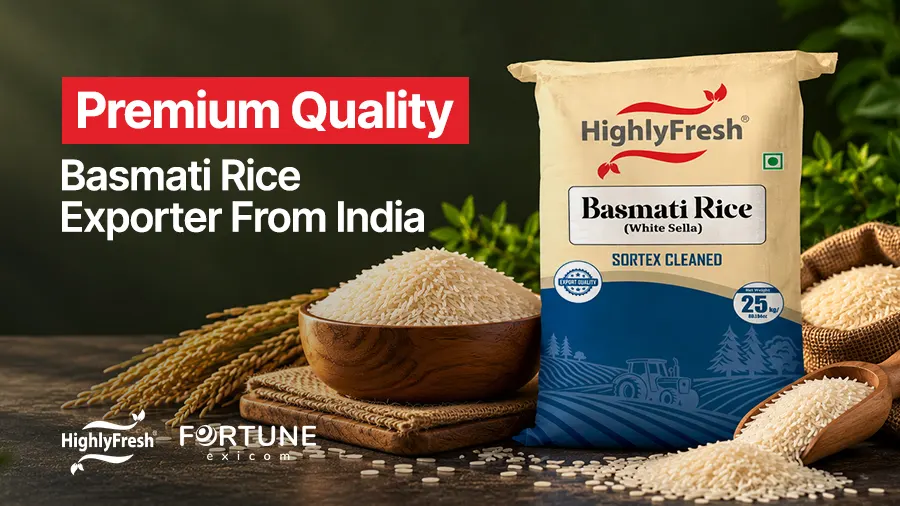
Choosing a rice exporter is about more than price. Importers need the right grain type, clear product specs, safe packing, and supply terms that fit their business. A poor match can lead to customer complaints, added costs, and delays.
As a Premium Quality Basmati Rice Exporter From India, Fortune Exicom offers Basmati rice under its HighlyFresh brand for buyers who need rice for wholesale, retail, food service, and other trade needs. Our Basmati range includes 1121, 1718, and 1509 varieties in White Sella and Golden Sella options. This guide explains how buyers can compare these rice types, check product quality, and prepare a clear bulk order enquiry.
Why Choose a Basmati Rice Exporter From India?
India is a key source of Basmati rice for importers and food businesses. The Agricultural and Processed Food Products Export Development Authority (APEDA) reports that India exported 6.52 million metric tonnes of Basmati rice in 2025–26, with an export value of about US$5.67 billion. Saudi Arabia was the leading destination, with 16.6% of India’s Basmati rice export value. These figures show the role of Indian Basmati in the global rice trade. Source: APEDA, Basmati Rice
For bulk buyers, the choice of exporter can affect product quality, order planning, packing, and delivery. A suitable supplier should be able to share clear product details and explain what is included in a quote. Buyers should also check that the chosen rice type suits their customers and market. These steps help reduce the risk of a mismatch after the order is placed.
What Buyers Should Check Before Choosing a Supplier
Before placing a bulk order, ask the exporter for:
- The exact rice variety and processing type.
- Grain length, broken grain limit, moisture level, and purity specs.
- Sample availability and sample approval terms.
- Available bag sizes and packing details.
- Minimum order quantity and lead time.
- Export documents and shipment terms.
- Price validity and payment terms.
A clear written offer makes it easier to compare suppliers on the same basis. It also helps both sides agree on the product before the shipment is prepared.
Meet Fortune Exicom and the HighlyFresh Rice Range
Fortune Exicom supplies Basmati rice under its HighlyFresh brand. Its product range includes 1121 Basmati Rice White Sella, 1121 Basmati Rice Golden Sella, 1718 Basmati Rice White Sella, 1718 Basmati Rice Golden Sella, 1509 Basmati Rice White Sella, and 1509 Basmati Rice Golden Sella. Buyers can review the available products and contact the company to discuss their needs. Product choice should be based on the buyer’s target market, cooking use, and required specs.
As a rice supplier and export company from India, Fortune Exicom works with business enquiries for product details, pricing, and samples. We recommend that buyers share their expected volume, packing needs, destination, and preferred rice type when making an enquiry. This helps the sales team understand the request and respond with relevant details. Buyers should confirm all specs, prices, and shipment terms in writing before placing an order.
View the HighlyFresh Basmati rice range to review the available product types.
Basmati Rice Varieties Available for Export
Different Basmati varieties can suit different buyer needs. Grain length, cooking result, processing type, price, and customer preference can all affect the choice. A buyer who supplies restaurants may have different needs from a retailer or a food distributor. The best option is the one that meets the agreed product specs and suits the end use.
1121 Basmati Rice
1121 Basmati rice is known for its long, slender grains. It is often considered by buyers who want long grains and a distinct cooked appearance. The final cooking result depends on the rice grade, age, processing method, and cooking method. Buyers should review a sample before confirming a large order.
1718 Basmati Rice
1718 Basmati rice is another option for bulk buyers comparing Basmati varieties. Buyers should assess grain length, aroma, texture after cooking, and the cost per unit. The name of the variety alone does not confirm the full grade or the final cooking result. Request a written specification sheet and sample before making a final choice.
1509 Basmati Rice
1509 Basmati rice is available in different processing types, including White Sella and Golden Sella. Buyers can compare these options based on the needs of their customers and the price range they plan to serve. Ask the exporter to confirm the grade, grain specs, and packing for the exact product offered. View the 1509 Basmati Rice White Sella product page for more details.
White Sella and Golden Sella Basmati Rice
Sella rice is parboiled rice. In this process, paddy is soaked, steamed, and dried before milling. This process affects the grain’s colour, texture, and cooking behaviour. Golden Sella tends to have a deeper yellow or gold shade, while White Sella is lighter in colour.
The choice depends on the buyer’s market and customer preference. Do not judge a product by colour alone. Ask for a sample, written specs, and clear details of the processing type before confirming the order.
Basmati Rice Variety Comparison
| Rice type | What buyers should review | Best next step |
|---|---|---|
| 1121 Basmati | Grain length, aroma, cooked grain appearance | Request a sample and grade specs |
| 1718 Basmati | Grain quality, cooking result, price | Compare with other varieties using the same test |
| 1509 Basmati | Processing type, grain specs, target price | Confirm White Sella or Golden Sella |
| White Sella | Grain colour, texture, cooking result | Test the sample using the intended cooking method |
| Golden Sella | Colour, grain condition, cooking result | Confirm the required colour and grade in writing |
This table is a starting point, not a replacement for product testing. The final choice should follow the buyer’s written specs and sample approval.
How to Check Basmati Rice Quality Before Buying
A supplier’s product description is useful, but it should not be the only basis for a bulk purchase. Buyers should check the product details that affect the final use of the rice. A written spec sheet gives both sides a shared record of the agreed grade. The same details should be used when checking the sample and the shipped goods.
Grain Length and Broken Grains
Ask the exporter to state the grain length and allowed percentage of broken grains. Grain size and the amount of broken rice can affect how the product looks and cooks. Check the figures against the buyer’s own requirements and the destination market’s rules. If the specs are not clear, ask for them to be stated before the order is confirmed.
Moisture and Purity
Moisture levels can affect storage and product condition. Buyers should ask for the stated moisture limit and how it will be checked. Purity specs should also state the allowed amount of foreign matter or other grains. Where a test report is available, review the report details and confirm that they match the lot being offered.
Aroma and Cooking Test
Aroma and cooking results are important for Basmati rice. A sample test can help buyers assess grain extension, texture, smell, and the final appearance after cooking. Use a cooking method that reflects how the buyer’s customers will prepare the rice. Record the sample result and get written approval before moving to a large order.
Packing and Lot Details
Packing must protect the rice during handling and transport. Ask for the bag material, bag size, net weight, label details, and packing method. Confirm that the lot or batch details on the documents match the product being shipped. Do not rely on a general product photo as proof of the actual lot.
Basmati and Non-Basmati Rice: What Should Buyers Choose?
Basmati and non-Basmati rice serve different buyer needs. Basmati is known for its aroma and long, slender grain, while non-Basmati rice includes a wider range of grain types and cooking uses. Price, customer preference, local demand, and the intended dish can all affect the choice. Importers should match the rice type to the needs of their buyers rather than selecting only by price.
| Factor | Basmati rice | Non-Basmati rice |
|---|---|---|
| Common buying focus | Aroma, long grain, cooked grain extension | Grain type, cooking use, price |
| Product range | Includes types such as 1121, 1718, and 1509 | Includes many varieties for different uses |
| Buyer checks | Grain specs, aroma, cooking test, processing type | Grain specs, cooking result, broken grain level |
| Key question | Does the grade fit the buyer’s market and menu? | Does the variety fit the buyer’s use and price range? |
A rice exporter may supply both product groups, but buyers should request a separate spec sheet for each variety. Do not assume that checks used for one rice type will apply to another. The grade, quality limits, and required documents should be confirmed for the exact product. Fortune Exicom buyers can start with the Basmati rice product range and contact the company if they need to discuss their order needs.
How to Select a Trusted Rice Supplier and Exporter From India
A trusted supplier should provide clear answers about the product, order terms, and shipment process. Buyers should check company details and request documents that apply to the product and destination. It is also useful to keep a written record of all agreed specs and changes. These steps help buyers make a more informed choice.
Check Company and Export Details
Review the supplier’s company information and ask for the relevant export documents. Confirm the legal company name and the details shown on the quotation and invoice. Check any certification claims against valid documents rather than relying on logos or general statements. Buyers can learn more about Fortune Exicom before sending an enquiry.
Request a Sample and Written Specs
A sample helps buyers judge whether the product meets their needs. Ask for a spec sheet that lists the variety, processing type, grain length, broken grain limit, moisture, purity, and packing. Confirm how the bulk lot will be checked against the approved sample. Keep the final approved specs with the purchase order.
Confirm Price and Shipment Terms
A rice quote may vary based on grade, volume, packing, shipment terms, destination, and market conditions. Ask the supplier to state the price basis, currency, validity period, and what charges are included. If the quote uses FOB or CIF terms, confirm the named port and the costs covered under the agreed term. Use the same order details when comparing offers from different suppliers.
Check Export Documents and Destination Rules
Export paperwork can vary by product and destination. APEDA provides official guidance on India’s rice export requirements, including the Registration-cum-Allocation Certificate (RCAC) process. Importers should also check the rules that apply in their own country before placing an order. Review the latest guidance on the APEDA rice export requirements page.
Bulk Rice Supply, Packaging, and Export Enquiries
A clear enquiry helps the exporter provide a quote that fits the buyer’s needs. Include the product name, variety, processing type, quantity, bag size, destination port, and expected delivery window. State any quality specs or label needs that must be met. If the order is for a retail brand, mention the required pack design and label details at the start.
Details to Include in a Bulk Order Request
Before sending a request to a rice supplier, prepare these details:
- Product: Basmati or non-Basmati, variety, and processing type.
- Quantity: Total volume and expected order frequency.
- Quality: Grain length, broken grain limit, moisture, purity, and any test needs.
- Packing: Bag size, bag type, label needs, and net weight.
- Destination: Country, port, and any known import rules.
- Shipping: Preferred shipment date and agreed trade term.
- Commercial terms: Currency, payment method, and quote validity.
The more exact the request, the easier it is to compare the offers received. If a detail is not yet known, state that it needs to be discussed. Confirm all open points before paying or approving the final order.
Conclusion
Choosing a Premium Quality Basmati Rice Exporter From India starts with clear product specs and careful checks. Buyers should compare rice varieties, test samples, review packing details, and confirm shipment terms before placing a bulk order. A written agreement on the grade and quality limits helps both sides know what is expected. These steps can help importers choose a supplier that fits their business needs.
Fortune Exicom offers the HighlyFresh Basmati rice range for business buyers who want to discuss product options, prices, samples, and export needs. Review the Basmati rice range or contact Fortune Exicom with your order details to begin an enquiry.
Questions to Ask Before Confirming an Order
Ask the exporter how the product is graded, how samples are approved, and how the final lot is checked. Confirm which documents will be shared and who is responsible for each part of the shipment. Ask what happens if the shipped product does not match the agreed specs. Keep the answers in writing so the buyer and supplier share the same terms.
Frequently Asked Questions
How can we find a Basmati rice exporter from India?
Start by listing the rice type, quantity, quality specs, packing, and destination. Review supplier details and request product specs and samples. Compare quotes using the same grade and shipment terms. Confirm the final product and commercial terms in writing before placing the order.
Which Basmati rice varieties can buyers request from Fortune Exicom?
The Fortune Exicom website lists 1121, 1718, and 1509 Basmati rice in White Sella and Golden Sella options. Buyers should check the product pages and ask the sales team to confirm current availability, specs, packing, and price. Product details should be confirmed for each order. Visit the HighlyFresh Basmati rice range.
What details should a bulk rice buyer request?
Ask for the variety, grade, grain length, broken grain limit, moisture, purity, processing type, packing, and price basis. Also confirm the minimum order quantity, shipment terms, payment terms, and required export documents. A sample and written spec sheet can help reduce the risk of a mismatch. Keep the approved details with the order records.
Can buyers request rice samples before placing an order?
Buyers can contact Fortune Exicom to ask about sample availability and the terms for sending a sample. The request should state the rice variety, processing type, target grade, and destination. Before approving a large order, compare the sample with the written specs. Confirm how the bulk lot will be checked against the approved sample.
How can buyers contact Fortune Exicom for a rice quote?
Buyers can use the Fortune Exicom contact page to send a business enquiry. Include the product type, required quantity, bag size, destination port, and any quality specs. This gives the team a clear starting point for the quote. Confirm all price, packing, and shipment terms before placing an order.

