
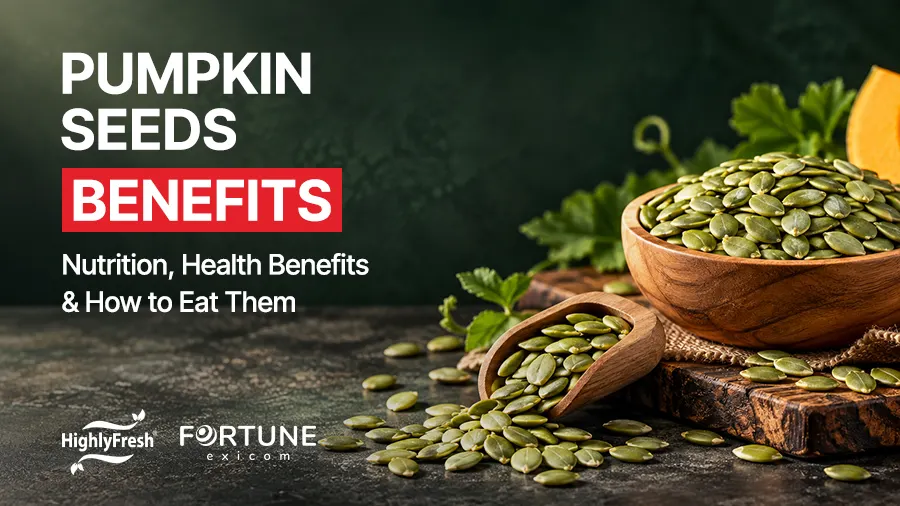
Looking for pumpkin seeds benefits beyond a quick snack? Pumpkin seeds are small, but they provide protein, healthy fats, fiber, magnesium, zinc, phosphorus, and iron.
We find them useful because they are easy to add to normal meals. In this guide, we explain their nutrition, possible health benefits, simple ways to eat them, serving tips, and safety points.
What Are Pumpkin Seeds?
Pumpkin seeds are the edible seeds found inside pumpkins and other squash. You can eat them with the outer shell or use the soft inner kernels, often called pepitas.
They can be eaten raw, roasted, ground, or added to foods such as yogurt, oats, salads, soups, rice, and snack mixes.
Pumpkin Seeds vs Pepitas
The terms are often used in a similar way, but they can refer to different forms.
Pumpkin seeds may include the full seed with its outer shell. Pepitas usually refer to the shelled green kernel.
Shelled vs Unshelled Pumpkin Seeds
Shelled kernels are soft and easy to add to meals. Whole seeds with the shell have a firmer texture and can provide more fiber.
For daily meals, we find shelled kernels more convenient because they can be mixed into many foods without extra prep.
Pumpkin Seeds Nutrition
Pumpkin seeds are rich in several key nutrients. A 1-ounce serving of roasted, unsalted pumpkin seed kernels provides about 163 calories, 8.5 grams of protein, 13.9 grams of fat, 156 mg of magnesium, 332 mg of phosphorus, and 2.2 mg of zinc. These figures are based on USDA data.
| Nutrient | Approx. amount per 1 oz |
|---|---|
| Calories | 163 kcal |
| Protein | 8.5 g |
| Fat | 13.9 g |
| Carbohydrates | 4.2 g |
| Fiber | 1.8 g |
| Magnesium | 156 mg |
| Phosphorus | 332 mg |
| Zinc | 2.2 mg |
| Iron | 2.3 mg |
| Copper | 0.4 mg |
Key Nutrients in Pumpkin Seeds
Magnesium: Magnesium supports normal muscle and nerve function, blood sugar control, blood pressure, protein production, and bone health.
Zinc: Zinc supports immune function, wound healing, protein production, and DNA formation.
Protein: Protein helps build and maintain muscles and other body tissues.
Healthy fats: Most of the fat in pumpkin seed kernels is unsaturated fat.
Fiber: Fiber can support normal digestion and can help make a snack more filling.
Phosphorus: Phosphorus is needed for bones, teeth, energy use, and cell function.
Pumpkin Seeds Benefits
The nutrition profile helps explain why pumpkin seeds are part of many balanced diets. Still, we do not treat them as a cure for any disease.
1. May Support Heart Health
Pumpkin seeds provide magnesium and unsaturated fats. Magnesium has a role in normal blood pressure and heart function.
Research on magnesium and heart health suggests that people with higher magnesium intake may have lower risk of some heart problems, but this does not mean pumpkin seeds alone prevent heart disease.
2. May Support Bone Health
Magnesium and phosphorus both have roles in normal bone health. Pumpkin seed kernels provide a useful amount of magnesium in a small serving.
The body also needs other nutrients for bone health, so we recommend using pumpkin seeds as part of a varied diet rather than relying on one food.
3. May Support Healthy Blood Sugar Levels
Pumpkin seeds contain protein, fat, fiber, and magnesium. Magnesium is involved in the body’s use of blood sugar.
Some research links higher magnesium intake with a lower risk of type 2 diabetes. However, eating pumpkin seeds should not replace treatment or medical advice for diabetes.
4. May Support Digestive Health
Pumpkin seeds provide dietary fiber, which can help support normal bowel function.
Portion size still matters. Eating a large amount at once may cause stomach discomfort in some people, especially if their usual diet is low in fiber.
5. May Support Sleep
Pumpkin seeds contain magnesium and the amino acid tryptophan. Both have been studied in relation to sleep and normal body function.
We would not call pumpkin seeds a sleep treatment. They can simply be part of a balanced evening snack or meal.
6. May Support Immune Function
Zinc plays an important role in normal immune function. Pumpkin seed kernels provide zinc, along with other nutrients.
The amount of zinc in a serving is useful, but pumpkin seeds should be viewed as one food source among many rather than a stand-alone way to improve immunity.
7. May Support Prostate and Urinary Health
Pumpkin seeds have been studied for their possible role in prostate and urinary health. Some research has looked at pumpkin seed products and symptoms related to the prostate.
The evidence is not strong enough to treat pumpkin seeds as a medical therapy. Anyone with urinary or prostate symptoms should speak with a health professional.
8. May Support Reproductive Health
Zinc is needed for normal reproductive function, and pumpkin seeds provide this mineral.
Some studies have explored pumpkin seed intake and male reproductive health, but more human research is needed before making strong claims.
9. May Help With Fullness
Pumpkin seeds provide protein, fat, and fiber. These nutrients can make them a more filling snack than many highly refined snack foods.
They are also calorie-dense. A small handful can add a fair amount of energy, so portion size matters if you are watching total calorie intake.
10. Provide Antioxidant Compounds
Pumpkin seeds contain plant compounds and nutrients that have antioxidant activity.
Antioxidants help protect cells from oxidative stress. We recommend getting these compounds from a mix of foods rather than relying on one food.
How to Eat Pumpkin Seeds
You do not need a special recipe to add pumpkin seeds to your diet. We find that the easiest approach is to add a small amount to foods you already eat.
Eat Them Raw
Raw pumpkin seed kernels can be eaten as a snack or added to yogurt, oats, smoothies, and homemade mixes.
Choose plain kernels if you want to keep added salt and flavorings low.
Dry Roast Them
Dry roasting gives pumpkin seeds a crisp texture and deeper nutty taste.
Use a dry pan over low to medium heat and stir often. Remove them once they become lightly toasted.
Add Them to Yogurt and Oatmeal
Sprinkle pumpkin seed kernels over plain yogurt, oats, or overnight oats.
You can combine them with fruit, nuts, cinnamon, or a small amount of honey.
Add Them to Salads and Soups
Pumpkin seeds add crunch to green salads, roasted vegetables, soups, and grain bowls.
For a quick lunch, add them to a salad with vegetables, beans, and a simple lemon dressing.
Use Them in Indian Meals
Pumpkin seeds can fit into many Indian foods without changing the main dish.
Try adding them to:
- Poha
- Upma
- Dal
- Rice
- Raita
- Chutney
- Thepla
- Vegetable dishes
- Homemade snack mixes
Ground pumpkin seeds can also be mixed into chutneys or used as part of a dry spice mix.
Grind Them Into a Powder
Ground pumpkin seeds can be mixed into yogurt, smoothies, sauces, chutneys, or dough.
We suggest grinding only a small amount at a time if you do not plan to store it in a cool place.
Make Pumpkin Seed Butter
Roast the kernels lightly, let them cool, and blend them until they form a thick paste.
You can use pumpkin seed butter on toast, with fruit, or in smoothies.
Raw vs Roasted Pumpkin Seeds
Both forms can work well. The main difference is taste, texture, and how you plan to use them.
| Type | Taste | Best Uses | Key Point |
|---|---|---|---|
| Raw | Mild | Yogurt, smoothies, oats | No cooking needed |
| Dry roasted | Nutty | Snacks, salads, soups | More crunch |
| Shelled | Soft | Cooking, yogurt, oats | Easy to use |
| Unshelled | Firm | Roasting, snacking | Outer shell adds texture |
If you buy roasted pumpkin seeds, check the label for added salt, sugar, or oil.
How Much Pumpkin Seeds Should You Eat Daily?
There is no single amount that fits every adult. A common serving is about 1 ounce, or 28 grams, which is roughly a small handful.
A 1-ounce serving of roasted pumpkin seed kernels provides about 163 calories, so eating several handfuls can add calories quickly.
We suggest starting with a small portion and adjusting it based on your overall diet. People with specific health needs should ask a doctor or dietitian about their diet.
Are Pumpkin Seeds Good for You Every Day?
For many people, pumpkin seeds can fit into a balanced daily diet.
The key is variety. Use pumpkin seeds along with vegetables, fruit, whole grains, pulses, nuts, dairy or suitable alternatives, and other protein sources.
Plain or lightly roasted pumpkin seeds are often a better daily choice than versions with a lot of salt, sugar, or added oil.
Pumpkin Seeds Side Effects and Safety
Pumpkin seeds are generally used as a food, but there are a few points to keep in mind.
Digestive Discomfort
Eating a large amount at once may cause bloating or stomach discomfort, especially if you are not used to much fiber.
Start with a small portion and drink enough water as part of your normal diet.
Too Much Sodium From Salted Products
Plain pumpkin seeds contain little sodium, but salted versions can contain much more.
Check the nutrition label if you eat them often.
Allergies
People can have allergies to pumpkin seeds, although seed allergies vary from person to person.
If you have a known food allergy or develop symptoms after eating them, stop eating the product and seek medical advice.
Choking Risk for Young Children
Whole nuts and seeds can be a choking risk for young children. Young children should be given foods in forms that match their age and chewing skills, with appropriate supervision.
Storage and Freshness
Pumpkin seed kernels contain a fair amount of fat, so poor storage can affect freshness.
Keep them in a sealed container away from heat, light, and moisture. For longer storage, refrigeration or freezing can help maintain freshness.
Add Pumpkin Seeds to Your Daily Meals
The main pumpkin seeds benefits come from their nutrient profile, not from one single health claim. They provide protein, unsaturated fats, fiber, magnesium, zinc, phosphorus, and other nutrients in a small serving.
We recommend using them as one part of a varied diet. Add a small portion to foods you already enjoy, such as yogurt, oats, salads, dal, rice, chutney, or homemade snacks.
For food businesses, retailers, and bulk buyers, Fortune Exicom can provide edible pumpkin seed products for food and retail use. Contact the Fortune Exicom team to discuss product details, packing needs, and bulk supply.
Frequently Asked Questions
What are the main pumpkin seeds benefits?
Pumpkin seeds provide protein, healthy fats, fiber, magnesium, zinc, phosphorus, iron, and other nutrients. These nutrients support normal body functions, including muscle, nerve, immune, bone, and energy-related functions.
Are pumpkin seeds good for you every day?
They can fit into a balanced diet for many people. We suggest using a sensible portion and choosing plain or lightly salted options.
How many pumpkin seeds should you eat daily?
A common serving is about 1 ounce, or 28 grams. Your ideal amount depends on your total diet, calorie needs, and health goals.
Are pumpkin seeds high in protein?
Yes. One ounce of roasted pumpkin seed kernels provides about 8.5 grams of protein.
Are pumpkin seeds good for heart health?
Pumpkin seeds provide magnesium and unsaturated fats that can be part of a heart-friendly diet. However, pumpkin seeds alone should not be viewed as a way to prevent or treat heart disease.
Can pumpkin seeds help with sleep?
Pumpkin seeds contain magnesium and tryptophan, which have roles in normal body function. Research on pumpkin seeds and sleep is still limited, so they should not be treated as a sleep remedy.
Are pumpkin seeds good for men?
Pumpkin seeds provide zinc and other nutrients needed for normal body function. Pumpkin seed products have also been studied for prostate and urinary health, but they should not replace medical care.
Are pumpkin seeds good for digestion?
They provide dietary fiber, which supports normal bowel function. Large amounts may cause digestive discomfort in some people.
Should pumpkin seeds be eaten raw or roasted?
Both are suitable. Raw kernels have a mild taste, while dry roasting gives them a crisp texture and nutty flavor.
Are shelled pumpkin seeds healthier than unshelled?
Neither form is automatically better for every person. Shelled kernels are easier to eat, while whole seeds with the shell have a different texture and can provide more fiber.
Can you eat pumpkin seeds at night?
Yes. They can be part of an evening snack or meal. Keep the portion sensible because pumpkin seeds are calorie-dense.
What is the best way to eat pumpkin seeds?
There is no single best method. We like plain or dry-roasted kernels added to yogurt, oats, salads, soups, rice, chutneys, and homemade snack mixes.

