
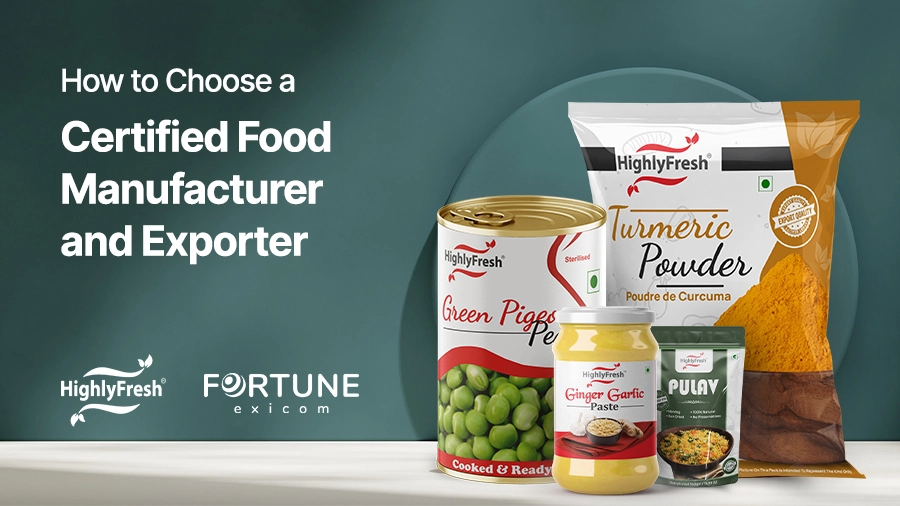
Finding the right partner to make and ship your food products is a big deal. Whether you are starting a new brand or growing an old one, your reputation depends on the quality of the food you sell. You need a food manufacturer and exporter that understands both the kitchen and the shipping port. This guide will help you understand how to choose a Certified Food Manufacturer that fits your needs perfectly. Companies like Fortune Exicom show how important it is to have a partner who knows the global market inside and out.
Why Choosing a Certified Food Manufacturer Matters
When you pick a Certified food manufacturer, you are buying peace of mind. Food safety and adherence are the most important parts of this business. If a manufacturer does not follow the rules, your products could be seized at the border or, even worse, make someone sick. A certified partner confirms that every ingredient is safe and every process follows the law. This keeps your business running without legal difficulties.
Quality assurance is about making sure the food tastes and looks the same every single time. A professional food manufacturing partner has systems in place to look for mistakes before the food leaves the factory. This leads to global market acceptance. Most big retailers and international buyers will not even talk to you if your supplier doesn’t have the right paperwork. Protecting your brand means making sure your customers trust what they eat, and that trust starts at the factory floor.
Verify Essential Food Safety Certifications
Knowing your food certifications for export is the first step in vetting a supplier. You should look for these specific labels:
- GFSI (Global Food Safety Initiative): This is not one single certificate, but an organization that approves other certification programs. If a factory is GFSI-recognized, it means they meet the highest global standards for safety.
- FSSAI: This is the food authority in India. A Certified Food Exporter from India must have this to operate legally and ensure the food meets national safety standards.
- HACCP & ISO 22000: HACCP focuses on finding and stopping hazards during production. ISO 22000 is a more comprehensive management system that ensures the whole company is focused on food safety.
- BRCGS, SQF & FSSC 22000: These are specific safety programs recognized worldwide. BRCGS is very common in Europe, while SQF is popular in the US. They prove the factory is clean and well-managed.
- FDA Registration: If you want to sell in the United States, your Food Exporter must be registered with the FDA. This allows the US government to track where the food comes from.
- Halal, Organic & Kosher Certifications: These are special certificates for specific diets. Halal is for Muslim consumers, Kosher is for Jewish consumers, and Organic proves no chemicals were used. These open up much larger markets for your brand.
Evaluate Manufacturing and Quality Standards
You need to look past the paperwork and see how the factory actually runs. Production capacity is vital. Can they make enough food to keep up with your sales? If you grow quickly, you need a food manufacturer that can grow with you. You should also check their hygiene standards. A clean factory reduces the risk of contamination and keeps the food fresh longer.
Food quality control is another big piece of the puzzle. Ask how they test their products. Do they have their own lab, or do they send samples to a third party? This is especially important for a private-label food manufacturer who is putting your name on their products. You also need to look at their packaging. The right packaging keeps the food safe during long trips across the ocean and makes your brand look professional on the shelf.
Assess Export Expertise and Supplier Reliability
Making food is one thing; moving it across the world is another. A true Certified food Exporter knows how to handle the complicated world of international trade. Regulatory compliance varies by country, and your partner must know the rules for the place you are selling. This includes everything from label laws to ingredient restrictions.
Export documentation is often where new businesses get stuck. You need a partner who can handle bills of lading, certificates of origin, and health certificates without making mistakes. If the paperwork is wrong, your food stays at the dock. Good logistics and supply chain management mean the Food Exporter can find the best shipping routes and keep costs low, assuring your product arrives on time and in good condition.
Check Supplier Reliability
Before signing a contract, you must verify that the supplier is who they say they are. Factory audits are the best way to do this. If you cannot visit the factory yourself, hire a third-party inspector to go for you. They will look at the machines, talk to the workers, and check the cleaning logs. This ensures the food manufacturing partner is maintaining high standards every day.
Batch traceability is a lifesaver if something goes wrong. If one ingredient is bad, the manufacturer should be able to tell exactly which boxes of food contain that ingredient. This allows for a targeted recall instead of throwing everything away. Finally, check customer reviews and references. A reliable Certified Food Exporter will be happy to share stories of other happy clients they have helped over the years.
Questions to Ask Before Choosing
When meeting a potential partner, bring a list of questions. This shows you are serious and helps you compare companies. Start with these:
- What certifications do you hold? Make sure they match the ones required for your target market.
- Can you provide audit reports? Seeing a recent audit can tell you a lot about how the factory is actually managed.
- What are your MOQ and lead times? The Minimum Order Quantity (MOQ) needs to fit your budget, and lead times must match your sales schedule.
- Do you offer private-label manufacturing? This is key if you want your own branding on the package.
- How do you manage quality testing and traceability? Listen for specific details about their software and lab processes.
Common Red Flags
Keep an eye out for these warning signs during your search:
- Missing Certifications: If they make excuses about why they don’t have a specific certificate, be careful.
- Poor Communication: If they take days to answer a simple email now, imagine how hard it will be when there is a real problem.
- Inconsistent Quality: If samples look different every time they arrive, the mass production will likely be worse.
- No traceability system: This is a major safety risk and a sign of a poorly run business.
Conclusion
Choosing a Certified Food Manufacturer and Exporter is one of the most important decisions for your business. By focusing on essential certifications, high-quality standards, and export expertise, you can find a partner that helps you grow. Remember to do your homework, ask the right questions, and never settle for a supplier that cuts corners. A strong partnership with a company like Fortune Exicom can turn your food brand into a global success story.
FAQs
What is the difference between a co-packer and a food manufacturer?
A food manufacturer typically handles the entire process of creating the food from raw ingredients, while a co-packer (contract packer) usually focuses on the packaging of products that might already be semi-processed. Many companies perform both roles.
How do I verify if a manufacturer’s certificate is authentic?
You can verify certificates by checking the unique identification number on the official website of the issuing body, such as the BRCGS directory or the FSSAI online portal.
What are the common pitfalls when importing food from overseas?
Common pitfalls include incorrect labeling for the destination country, missing export documentation, unexpected customs duties, and choosing a manufacturer without proper batch traceability.
How long does the onboarding process usually take?
Onboarding a new food manufacturing partner typically takes 3 to 6 months. This time is used for audits, sample testing, label design, and setting up the logistics management.
Why is batch traceability so important for exporters?
Batch traceability allows you to track every ingredient and finished product through the supply chain. If a safety issue occurs, you can recall only the affected batch rather than your entire inventory.

