
Picking the right products for your shelves can feel like a guessing game. If you run a grocery store or a local shop, you have likely noticed that shoppers are busier than ever. They want a quick meal, but they also want it to taste like it was made in a kitchen, not a lab. This brings up a big question: in the battle of Ready-to-Eat vs Ready-to-Cook Foods, which one deserves more space in your aisle? Understanding consumer food preferences is the first step to building a retail inventory strategy that actually makes money.
At Fortune Exicom, we have seen how the market is shifting. People aren’t just looking for cheap food anymore; they are looking for time. Whether they want a snack they can eat in the car or a dinner they can whip up in ten minutes, your store needs to be ready. Let’s break down these two heavy hitters so you can make the best choice for your business.
Defining the Categories: RTE vs. RTC
Before we look at the numbers, we need to be clear on what these terms mean. While they might sound similar, they serve two very different types of shoppers. Knowing the difference helps you talk to your customers and organize your shelves better.
What is Ready-to-Eat Food?
Ready to Eat food is exactly what it sounds like. It requires zero preparation. The customer buys it, opens the package, and starts eating. Think of items like pre-made sandwiches, salads, or even traditional dishes that are packed and sealed. These ready to eat food products are the ultimate time-savers. Most ready to eat food manufacturers in india focus on making these items shelf-stable or chilled so they can be eaten on the move.
What is Ready-to-Cook Food?
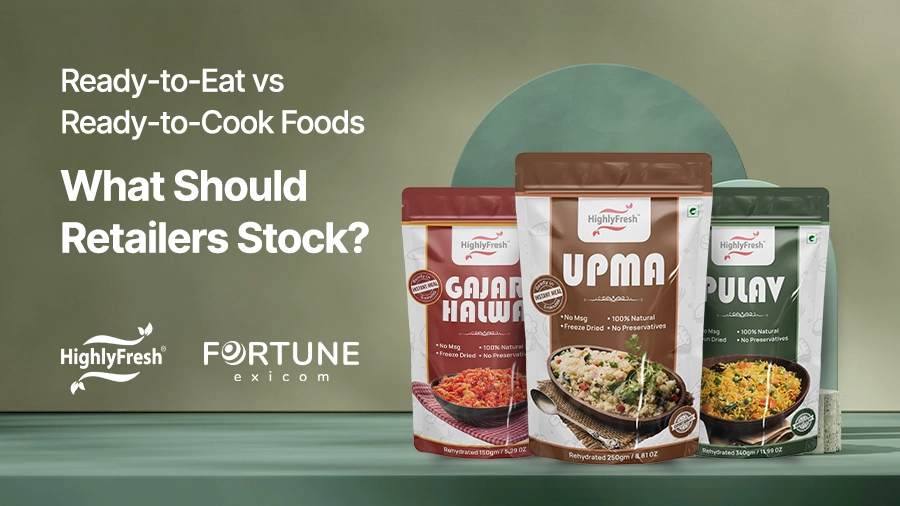
Ready-to-Cook Foods require a little bit of effort from the consumer. A ready to cook product might need to be boiled, fried, or heated in a microwave for a few minutes. This category includes things like Upma, Pulav, or even dessert mixes like Gajar Halwa. When a store stocks ready to cook products bulk, they are targeting people who still want to “cook” but don’t have the time to chop vegetables or mix spices from scratch.
The Case for Ready-to-Eat: The King of Convenience
If your store is near an office building, a school, or a transit hub, RTE is your best friend. This is the heart of the grab-and-go vs meal kits debate. People in a hurry don’t want to wait; they want a meal right now. Because these items are so easy, they tend to move off the shelves very quickly.
Working with a reliable ready to eat food supplier assures that your stock is fresh and appealing. The main draw here is the lack of friction. There is no cleanup and no cooking skills required. For a retailer, this means high volume. You might sell dozens of these units during a single lunch hour.
The Case for Ready-to-Cook: The Hybrid Solution
On the other hand, Ready to Cook items often offer better food service margins for the retailer. Since these products are often sold in larger portions or as part of a meal set, they encourage customers to buy more at once. Shoppers often perceive RTC items as ‘healthier’ or ‘fresher’ than their fully prepared counterparts. This is a major factor in modern consumer food preferences.
By stocking a variety of Ready-to-Cook Foods, you appeal to families who want to eat together. A mother might grab a pack of Pulav mix and some marinated paneer to serve a family of four in minutes. This turns your store into a one-stop shop for dinner solutions, rather than just a place to buy snacks. It builds a deeper connection with the customer’s daily routine.
Market Trends Driving the Choice
Current convenience food trends show that people are looking for healthier, more authentic options. It’s not only about frozen pizza anymore. People want ethnic flavors and traditional meals. This is why a ready-to-cook product that tastes authentic, like a rich Gajar Halwa, can be a top seller. Shoppers are moving toward “clean label” products that have fewer chemicals, even if they are packaged for convenience.
Which Should You Stock?
Deciding between the two depends on three main things. You can’t just pick what you like; you have to pick what your customers will actually buy.
Factor 1: Location and Foot Traffic
Who walks through your doors? If you are in a residential area where parents are shopping for family dinners, Ready-to-Cook Foods are a winner. They suit the family routine. However, if you are in a high-traffic urban area, focus on Ready to Eat items. These shoppers are likely looking for a quick bite between meetings or on their way home.
Factor 2: Storage and Cold Chain Capabilities
Ready to Eat meals often require refrigeration, which means higher electricity costs and a risk of spoilage if the power goes out. On the other hand, many Ready to Cook items are shelf-stable or frozen. Before you buy ready to cook products bulk, make sure you have the freezer or shelf space to handle it. Your storage limits will naturally dictate your food service margins.
Factor 3: Profit Margins vs. Waste
RTE items often have higher food service margins because people pay a premium for the labor already done for them. However, they also have a higher risk of waste (shrinkage) because they expire faster. RTC products usually have a lower margin per unit but stay good for much longer, reducing the risk of you having to throw away money.
The Hybrid Strategy: Why You Probably Need Both
The most successful stores use a mix of both. You can offer RTE snacks for the morning rush and RTC meal bases for the evening crowd. By providing a range of choices—from instant Upma to a warm bowl of gajar halwa—you ensure that no matter why a customer enters your store, they find something to satisfy their hunger.
Conclusion
In the battle of Ready-to-Eat vs Ready-to-Cook Foods, there is no single winner. The real winner is the retailer who understands their customer. Focus on providing convenience, quality, and variety. Start by stocking popular items like Pulav, Upma, and gajar halwa. As you watch what sells, you can adjust your retail inventory strategy to maximize your food service margins. Ready to upgrade your shelves? Partner with a trusted ready to eat food supplier today to keep your customers coming back for more.
FAQs
Which category has a higher profit margin for retailers?
Generally, Ready-to-Eat (RTE) products allow for higher markups because customers are willing to pay extra for the total convenience of not having to cook. However, Ready-to-Cook (RTC) products often have lower waste rates due to longer shelf lives, which can result in more stable long-term profits.
Are consumers moving away from processed RTE foods?
While there is a trend toward health-conscious eating, consumers aren’t moving away from RTE; they are moving toward ‘clean-label’ and high-quality RTE options. Modern manufacturers now offer many nutritious, preservative-free choices that meet these demands.
Is ‘Ready-to-Heat’ the same as ‘Ready-to-Cook’?
Not exactly. ‘Ready-to-Heat’ is usually considered a sub-type of Ready-to-Eat, as the food is already fully cooked and just needs a temperature change. ‘Ready-to-Cook’ usually implies some level of assembly or a final cooking step, like frying a pre-made patty or boiling noodles.
How can small retailers compete with big chains in the RTE/RTC space?
Small retailers can compete by offering niche, high-quality products that big chains might overlook. Focusing on local flavors, ethnic specialties like Gajar Halwa or Pulav, and providing excellent customer service helps build a loyal local following.
What is the typical shelf life for RTC products?
Depending on the packaging technology (like retort or vacuum sealing), many RTC products can last anywhere from 6 months to 2 years at room temperature, making them a very safe bet for retail inventory.

